Aluminium Water Block Manufacturing
Tiny aluminium blocks that decide whether your GPU, your factory, or your EV battery survives the next decade.
An aluminium water block is a deceptively simple object — a milled slab with internal microfin channels that pulls heat off a hot surface (a CPU, a GPU, an inverter, a battery module) and transfers it into circulating coolant. It is the workhorse of every liquid-cooling system on the planet, and demand for it is expanding in three directions at once: gaming and workstation PCs, industrial power electronics, and electric-vehicle battery thermal management.
Despite India being the world's third-largest PC market and the fastest-growing EV market, almost every water block sold here is imported — from Bitspower and Bykski in China, EK Water Blocks in Slovenia, and a handful of Taiwanese OEMs. Domestic manufacturing is essentially a vacuum. The components are not exotic: 6061/6063 aluminium billet, a 4-axis CNC, a nickel plating line, an O-ring, and a leak test rig. What is rare is the discipline to hold +/-0.05 mm tolerances on microfins 0.4 mm thick at scale.
BIDUA Industries sees aluminium water block manufacturing as a precision-engineering bridgehead — a plant that begins with PC enthusiast SKUs (high margin, forgiving volumes), graduates into industrial cold plates for inverters and laser cutters, and eventually wins design-ins on EV battery pack cooling modules where the market is measured in megawatts of thermal load, not gaming benchmarks.
Every silicon die, every IGBT, every lithium cell on earth is in a quiet war with heat — and the aluminium water block is the cheapest, most precise weapon in that war. India barely makes any of them.
The opportunity, on its own terms.
India's EV market is crossing the thermal cliff.
Two-wheeler and three-wheeler EV sales crossed 1.8 million units in FY25, and every serious passenger-EV launch from Tata, Mahindra, Maruti and Hyundai now ships with liquid-cooled battery packs — cold plates are no longer optional, they are on the BOM.
PC liquid cooling went mainstream.
AIO (all-in-one) coolers are the default on every gaming desktop sold above ₹70,000, and India's gaming PC market is projected to cross ₹15,000 crore by 2028. The water block inside that AIO is currently 100% imported.
China+1 sourcing is real money now.
Indian OEMs like Dixon, Amber and Kaynes are actively de-risking from Chinese thermal components. A domestic, GST-invoiced, BIS-compliant water block supplier walks into existing RFQs with a structural advantage.
Aluminium is suddenly cheap in India.
Hindalco and Vedanta have ramped 6061-grade billet capacity, and the PLI scheme for components subsidises capex on CNC and surface-finishing lines. The cost stack now works on Indian soil — it did not three years ago.
Sized in three rings.
- Consumer PC: ~30 lakh AIO coolers sold annually in India, each containing one aluminium or copper water block — almost all imported today.
- EV battery cooling: a typical passenger-EV pack uses 6–12 cold plates; at an expected 5 lakh EVs/year by 2028, that is 30–60 lakh plates of potential demand.
- Industrial: laser cutters, welding inverters, telecom base stations and 5G radios all use cold plates — a fragmented but sticky ₹800–1,200 cr Indian segment.
- Data centre: with India's data-centre capacity projected to triple by 2030, direct-liquid-cooling cold plates become a meaningful adjacency.
How it works, end to end.
Three-tier product ladder
Tier 1 — consumer CPU/GPU blocks sold direct-to-enthusiast under a BIDUA-owned brand (high margin, low volume, brand-building). Tier 2 — industrial cold plates custom-engineered for inverter and laser-cutter OEMs (mid volume, sticky contracts). Tier 3 — automotive cold plates for EV battery packs (high volume, low margin, multi-year PPAP-qualified).
Vertically integrated machining
Owned 4-axis and 5-axis CNC capacity from day one. Friction-stir welding for sealed two-piece designs. In-house nickel and electroless plating line. Helium leak-test rig for every unit. No outsourced critical steps.
Design library as moat
Build an internal library of 80+ validated microfin geometries (skived, pin-fin, jet-impingement) benchmarked against EKWB, Alphacool and Bitspower. Each EV cold plate then becomes a configuration of known-good parameters — collapsing engineering cycles from 14 weeks to 4.
PLI + export hybrid
Anchor revenue from India domestic OEMs and the enthusiast channel. Export to South-East Asia, Middle East and Eastern Europe under the PLI components scheme. Target 35% export mix by Year 4 to natural-hedge against domestic demand swings.
Cross-pollination with BIDUA Pods
BIDUA Pods' sleep capsules and ventilation systems share the same precision-aluminium supply chain. Sharing CNC capacity, billet contracts and quality teams across the two divisions improves utilisation and lowers per-unit overhead.
Three compounding phases.
Consumer brand & cashflow
- DIY enthusiast CPU/GPU blocks (₹2,500–6,500 each)
- Custom-loop kits to system integrators
- Replacement blocks for AIO refurbishers
- Job-work CNC for adjacent thermal startups
Industrial design-ins
- Inverter and welding-machine cold plates
- Telecom and 5G radio thermal modules
- Laser-cutter resonator cooling assemblies
- Export contracts (SEA, MENA, Eastern Europe)
EV & data centre scale
- Tier-2 supply to passenger-EV OEMs (PPAP qualified)
- Battery-pack cold plate assemblies for 2W/3W EVs
- Direct-to-chip cold plates for hyperscale data centres
- License revenue on patented microfin geometries
Patient cadence, deliberate steps.
-
Q1 2027Site selection in Noida / Greater Noida industrial belt. PLI application filed. Anchor 4-axis CNC and FSW machines ordered.
-
Q3 2027Pilot line live. First 20 consumer SKUs validated against EKWB / Bykski reference benchmarks at IIT Delhi thermal lab.
-
Q1 2028BIDUA-branded consumer blocks launch via Amazon, Flipkart and PC enthusiast channels. Target 5,000 units / month run-rate.
-
Q4 2028First industrial OEM contract signed (welding-inverter cold plates). Nickel plating line commissioned in-house.
-
2029–2030PPAP qualification with first Indian EV OEM. Capacity expanded to 5 lakh units / year. Helium leak-test automation deployed.
-
2031–2032Data-centre direct-to-chip program. Export mix crosses 30%. Microfin geometry IP filings published through PersistIP.
Who else is here — and why we're different.
- Only India-headquartered manufacturer covering enthusiast, industrial and EV in one plant.
- In-house 5-axis CNC + friction-stir welding + nickel plating — no outsourced critical steps.
- Validated microfin design library shortens EV OEM engineering cycles by ~70%.
- GST-invoiced, BIS-compliant supply chain — clean fit for PLI-driven OEMs de-risking from China.
What can go wrong — and how we plan for it.
Capex-heavy ramp (CNC and plating lines)
Mitigation: Phased capex aligned to PLI disbursement milestones. Initial line scoped to break-even at consumer-only volumes.
Chinese import price war on consumer SKUs
Mitigation: Brand-led positioning in mid-premium tier (not the bottom). Move quickly to industrial and EV where price is not the only axis.
EV OEM design-in cycle is 18–24 months
Mitigation: Consumer and industrial revenue funds the EV qualification runway. Begin OEM engagement in Year 1, not Year 4.
Aluminium price volatility
Mitigation: Annual billet contracts with Hindalco / Vedanta with quarterly index-linked pass-through clauses to OEM customers.
Quality escape on a leak-critical part
Mitigation: 100% helium leak-test on every unit (not statistical sampling). Traceability QR on each block back to billet lot and operator shift.
Connected BIDUA divisions.
Every BIDUA bet feeds something else in the group. This one connects to:
 Live
Live
BIDUA Pods
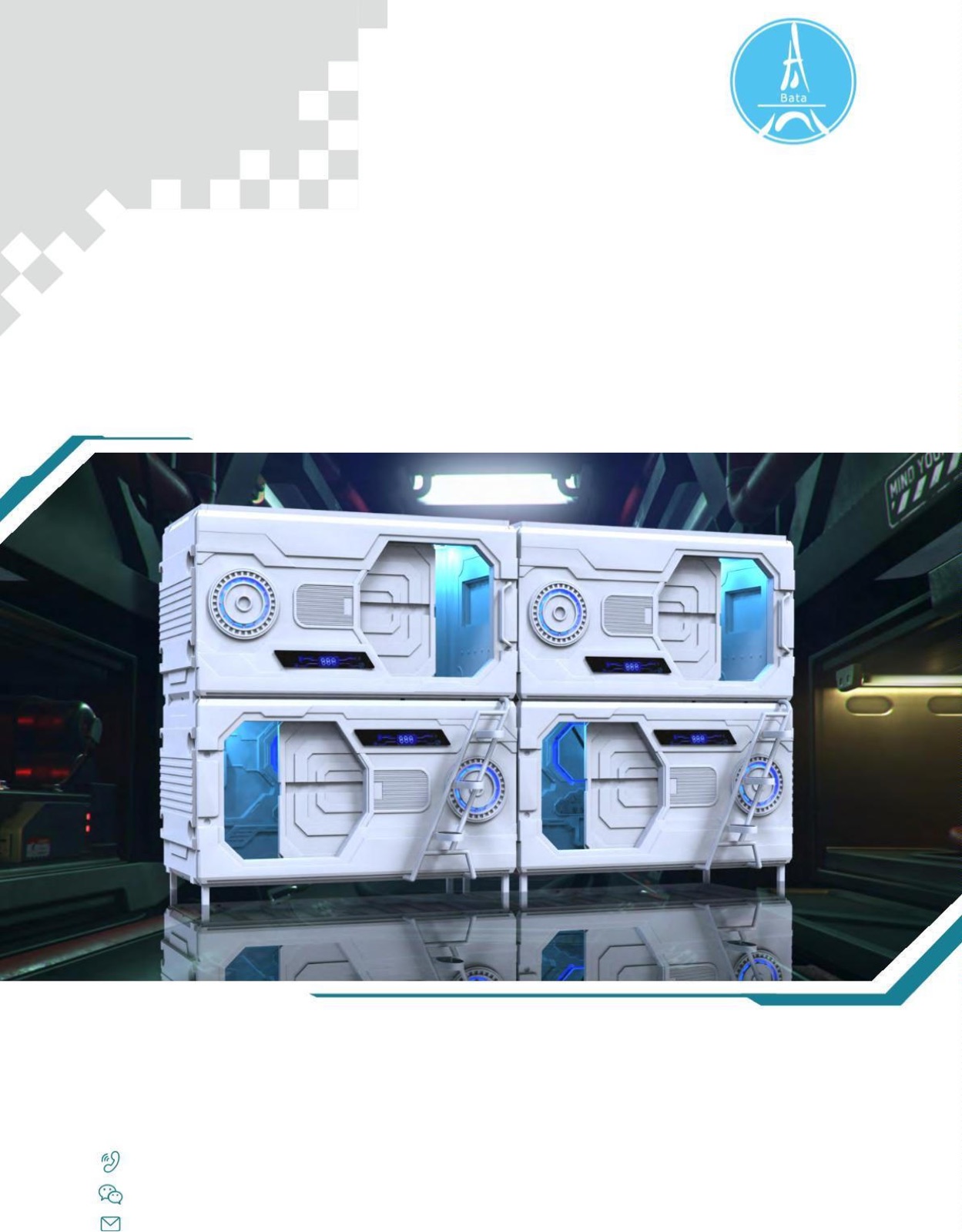
Shared precision-aluminium and CNC supply chain — ventilation, partitions and structural components flow through the same lines.
biduapods.com Live
Live
BIDUA Hosting
Future captive customer — direct-liquid-cooled cold plates for high-density GPU and AI inference racks.
biduahosting.com Live
Live
PersistIP
Files and defends BIDUA's microfin geometry and FSW process IP across India, US and EU jurisdictions.
ip.bidua.in
Questions partners and investors actually ask.
Why aluminium and not copper?
Copper has ~60% higher thermal conductivity but is 3x costlier and 3x heavier. For EV battery packs (weight matters) and consumer AIOs (price matters), aluminium wins on the system-level math. Premium SKUs will still use copper inserts where justified.
What is the realistic capex for the first line?
Roughly ₹18–25 crore for a pilot line covering CNC, FSW, nickel plating and leak-test — before working capital. Phase-2 EV-grade capacity adds another ₹40–60 crore.
How is this different from a generic CNC job-shop?
A job-shop sells machine hours. A water-block manufacturer sells validated thermal performance — fluid dynamics, microfin design, leak integrity, plating durability. The CNC is necessary but nowhere near sufficient.
Does India have the CNC talent?
Yes — Pune, Coimbatore, Faridabad and Noida have a deep precision-machining workforce. The gap is thermal-engineering talent, which we plan to seed via IIT Delhi / IIT Madras research tie-ups.
What is the path to EV OEM qualification?
PPAP (Production Part Approval Process) under IATF 16949 is the gate. Realistically 18–24 months from first sample to first SOP shipment. We start that clock in Year 2, not Year 4.
Is this a PLI-eligible business?
Yes — under the PLI scheme for white goods and the components extension for auto and electronics. Final eligibility depends on incorporation structure and value-addition thresholds, which we are designing into the SPV.
How does this connect to other BIDUA divisions?
BIDUA Pods shares the precision-aluminium supply chain. BIDUA Hosting will eventually need direct-liquid-cooling for high-density GPU racks — a captive internal customer. PersistIP files and prosecutes the microfin geometry IP.
What if EV adoption slows in India?
The enthusiast PC and industrial cold-plate segments alone justify Phase-1 capex. EV is the upside case, not the survival case. That asymmetry is deliberate.
Cool the next decade of Indian electronics.
We are scoping the Noida pilot line for 2027 commissioning. Investors, EV OEM thermal teams and CNC partners — we want to talk to you before the first block is milled.