Approximate Waiting Time Lift
Stop guessing. Every elevator lobby gets a quiet display telling you when the lift is actually arriving.
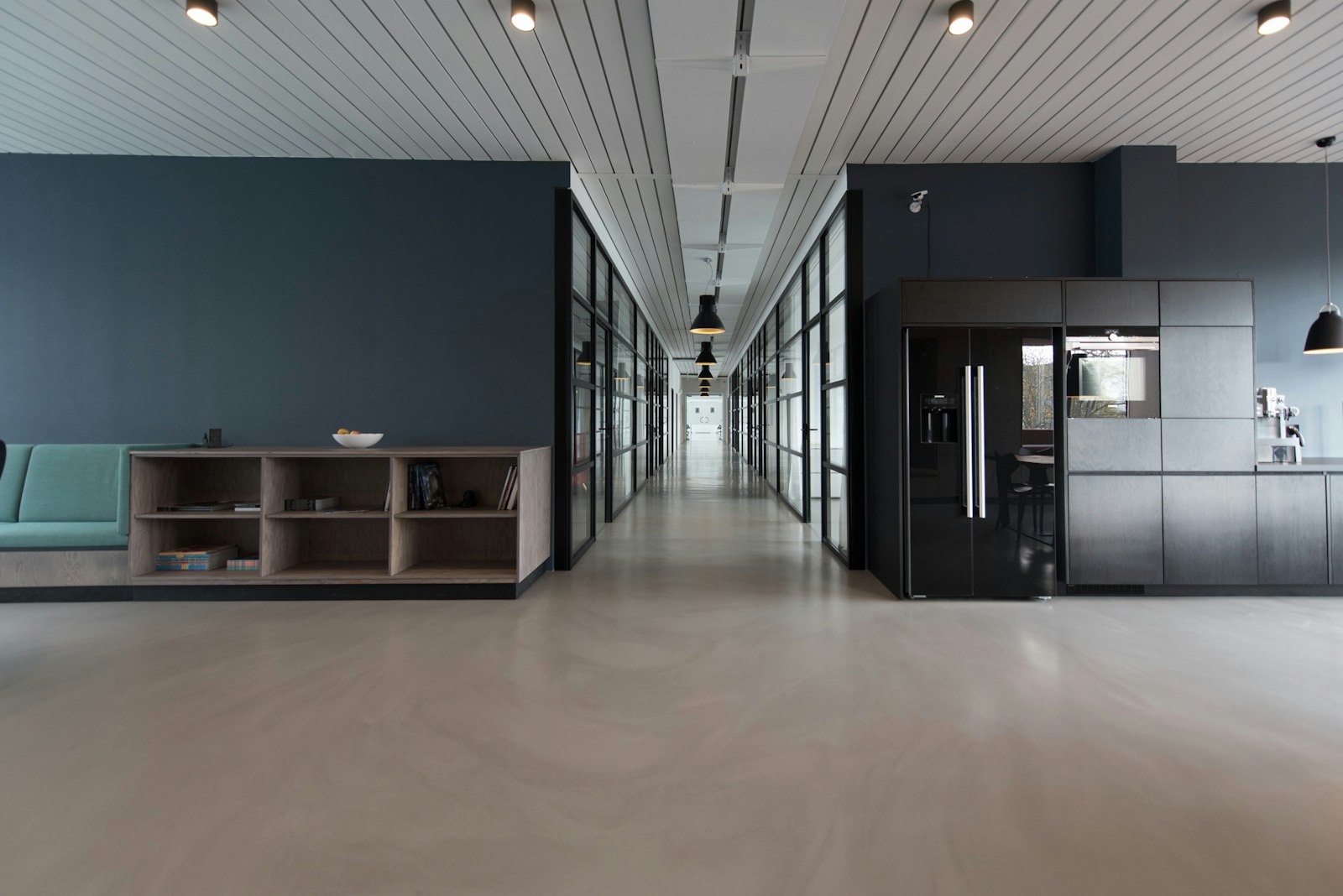
Standing in front of a closed elevator door not knowing whether the lift is 3 seconds away or 3 minutes away is one of the small, daily, universally hated experiences of high-rise living. People press the call button repeatedly, take the stairs out of frustration, or block the door when the lift finally arrives because they have no certainty about wait times.
BIDUA's Approximate Waiting Time Lift product is a small IoT retrofit kit and a slim e-ink or LED display panel mounted next to every elevator call button on every floor. It connects to the elevator's existing CAN-bus or relay-output controller, reads the car's position and direction in real time, runs a lightweight prediction model, and shows an estimated wait time in seconds.
This is a small product with a big footprint. India has more than 20 lakh installed lifts, with another ~50,000 added every year. Every one of them is a retrofit candidate. The BIDUA edge is the integration with PersistIP for the IoT connectivity layer and BIDUA Hosting for the cloud backend that learns each building's traffic patterns and improves predictions over time.
The most stressful object in a high-rise isn't the elevator. It's the button next to it. People press it thirteen times because they have no idea whether anyone heard them the first time.
The opportunity, on its own terms.

India is going vertical fast.
Every Tier-1 and Tier-2 city now has G+30 and G+40 residential and commercial towers. Wait times in these buildings during peak hours regularly cross 4 minutes — and the lobby psychology is dire.
Retrofit IoT has matured.
Cheap CAN-bus interfaces, ESP32-class microcontrollers and LoRa/Wi-Fi connectivity make a per-floor display kit possible for under ₹10,000 in bill-of-materials cost. This was simply not affordable in 2018.
Lift modernisation is a structural tailwind.
State-level lift regulations and ageing buildings are driving a wave of modernisation projects. Property managers actively look for low-disruption upgrades that improve resident NPS.
Smart-building penetration is real.
Property managers in Grade-A commercial and premium residential properties now expect IoT instrumentation — wait-time displays are an easy, visible, brand-positive addition.
Sized in three rings.
- Premium residential towers (G+20 and above) routinely have 4–8 lifts each — bulk-order economics work well.
- Grade-A commercial properties pay handsomely for any tenant-experience improvement that is visible at the lobby level.
- Hospitality (Naploo and similar branded hotels) is a natural early customer — guest experience matters disproportionately.
- AMC and analytics annuity over the device life — ₹1,200–₹2,400 per lift per year — is the long-term margin engine.
How it works, end to end.

Hardware sale per lift
Kit consists of one controller box (mounts inside the lift machine room), one display panel per floor (e-ink for premium installations, LED for budget) and the wiring harness. Total system price ₹40,000–₹90,000 per lift depending on floor count and display type.
Installation services
Two-person crew installs and commissions in 4–6 hours per lift. Service is bundled at ₹8,000–₹15,000 per lift depending on city. Installation is the gating skill — we run a certified installer programme rather than letting general electricians handle it.
Cloud subscription
Each lift sends position and wait-time data to a BIDUA Hosting backend. Predictions improve building-by-building as the model learns peak patterns. Subscription ₹100–₹200 per lift per month — covers the cloud backend, analytics dashboard for the facility manager and over-the-air firmware updates.
Analytics for facility managers
Dashboard shows lift utilisation patterns, peak-hour delays, button-press frequency and predictive maintenance signals (motor strain, door cycle counts). Facility manager moves from reactive to proactive.
Hospitality and OEM bundles
Pre-bundled SKUs for Naploo hotels, hospital chains and Grade-A office REITs. Direct OEM tie-ups with lift majors (Kone, Otis, Schindler, Mitsubishi) to ship the kit as a value-added option on new installations.
Three compounding phases.
Pilot + product polish
- 50–100 lift pilots in NCR towers
- Hardware + installation revenue
- Naploo deployment (captive)
- Early facility-manager subscriptions
Distribution
- 1,000+ lifts retrofitted
- Subscription annuity stabilises
- Partner installer network in 8 cities
- Hospitality + healthcare bundles
OEM and predictive maintenance
- OEM tie-ups with lift majors
- Predictive maintenance analytics tier
- Export to Middle East + Southeast Asia
- Building-management-system integrations
Patient cadence, deliberate steps.
-
Q2 2027Prototype kit tested in BIDUA's own Noida office tower and one Naploo property. Iterate on display readability and controller interface.
-
Q4 2027First commercial deployment — 10 residential towers in NCR. Refine installer training programme.
-
Q2 2028Cloud subscription product launches. Facility-manager dashboard ready.
-
Q4 2028500 lifts retrofitted. First Grade-A commercial property bulk order signed.
-
2029–2030Expand to 8 cities. OEM bundle conversations begin with at least one major lift manufacturer.
-
203120,000 lifts target. Predictive maintenance analytics tier launches.
Who else is here — and why we're different.
- Pure retrofit — no need to replace the elevator controller or coordinate with the lift OEM.
- Cloud backend that learns per-building traffic patterns and improves prediction accuracy over time.
- Predictive maintenance signals layered on top — facility manager value extends well beyond wait-time display.
- Naploo captive deployment proves the product in a brand-experience-sensitive environment first.
What can go wrong — and how we plan for it.
Lift OEMs block CAN-bus access
Mitigation: Fallback design uses optical sensors and door-status relays — does not require proprietary controller access. Works on any lift, any vintage.
Display longevity in Indian conditions (heat, dust)
Mitigation: IP54-rated enclosures. Industrial-grade e-ink panels. 3-year hardware warranty.
Installer quality variance
Mitigation: Certified installer programme. Direct BIDUA crews for the first 18 months. Quality-audit checklist for every installation.
Predictive model accuracy varies in low-traffic buildings
Mitigation: Conservative bounds shown on display in low-data periods. Honest 'calculating' state during the first 7 days of operation.
Power loss disables displays
Mitigation: Battery backup in the controller box. Display panels fall back to a static 'lift on the way' state when communication is lost.
Connected BIDUA divisions.
Every BIDUA bet feeds something else in the group. This one connects to:
 Live
Live
PersistIP
IoT connectivity and secure device-to-cloud transport for every retrofit kit.
ip.bidua.in Live
Live
BIDUA Hosting
Cloud backend running the prediction model, analytics dashboard and OTA firmware updates.
biduahosting.com Live
Live
Naploo™ Smart Pod Hotels
First captive deployment — branded hotel lobbies are an ideal proof environment.
naploo.com
Questions partners and investors actually ask.
Does this require replacing my existing lift?
No. This is a pure retrofit. We connect to your existing lift controller via CAN-bus or relay outputs, and install slim display panels next to each call button. The lift itself is untouched.
How accurate is the wait-time estimate?
Target accuracy is ±10 seconds in steady-state operation. The model learns each building's traffic patterns over the first 7–14 days, so accuracy improves with time.
What if there is a power cut?
The controller has a battery backup. Display panels show a fallback 'lift on the way' message if communication is lost. The lift itself continues to operate normally.
Does it work with all lift brands?
Yes. Kone, Otis, Schindler, Mitsubishi, Johnson Lifts, Fujitec — and even older non-OEM lifts. The fallback optical-sensor design works without proprietary controller access.
How long does installation take?
A typical 20-floor lift installation takes 4–6 hours with a two-person crew, including commissioning. Lift downtime is under 90 minutes.
What does the facility manager see?
A cloud dashboard showing each lift's utilisation, peak-hour delays, button-press frequency and predictive maintenance signals like motor strain and door cycle counts.
Is there a recurring fee?
Yes — ₹100–₹200 per lift per month for the cloud backend, dashboard and over-the-air firmware updates. Without the subscription, the wait-time display continues to work but loses cloud analytics.
Will Naploo properties use this?
Yes — Naploo is the first internal deployment, since guest experience is the natural early test case.
Make the wait knowable.
We are taking 50 lift pilot installations in NCR residential and commercial towers in 2027. Facility managers, lift contractors and property developers — talk to us.