Crypto-Based Lottery System
Provably fair, instantly paid, mathematically transparent — if Indian law ever permits it.

Lotteries in India are a state-subject under the Constitution — only some states permit them, and most that do have ageing paper-based or thinly-digital systems. Globally, on-chain lotteries like PoolTogether (a no-loss prize-saving model) have demonstrated that 'provably fair' is a meaningful product feature for users tired of opaque draws.
The Crypto-Based Lottery System is BIDUA's proposed design for a blockchain-anchored lottery platform: ticket sales recorded on-chain, randomness drawn via Chainlink VRF or equivalent verifiable RNG, prize pool held in a smart-contract escrow, and payout automatic on draw completion.
This is the most regulation-sensitive idea in BIDUA's fintech pipeline. It will not be launched in India until and unless there is clear, state-level legal authorization. The design work documented here is forward-looking — for the day that authorization exists, or for offshore deployment in a jurisdiction that already permits it. We are not soliciting players or selling tickets today.
Lotteries are the oldest financial product humans built — and the most opaque. Putting one on a verifiable chain is less about crypto novelty and more about finally letting a player audit the draw.
The opportunity, on its own terms.

Trust deficit in legacy lotteries is structural.
Allegations of rigging plague paper lotteries globally. A draw whose RNG is verifiable on a public chain solves a problem state operators cannot solve internally.
Chainlink VRF made fair randomness boring.
Verifiable on-chain randomness is now a commodity primitive — the cryptographic problem is solved. The remaining work is product, UX and compliance.
Indian states need digital modernization.
Kerala, Sikkim, West Bengal and Punjab operate digital lottery systems. Each is a potential B2B customer for a white-label, audit-grade infrastructure layer.
FinWault's KYC stack is mandatory infrastructure.
Any lawful lottery needs identity verification, age gating, tax withholding (TDS on prizes ≥ ₹10k under section 194B). FinWault already does all of this for other use cases.
Sized in three rings.
- 13 Indian states currently permit lotteries — each runs separate paper / digital systems ripe for consolidation.
- Section 194B mandates 30% TDS on lottery winnings ≥ ₹10,000 — a feature an on-chain system can automate end-to-end.
- Foreign tourism-jurisdiction operators (UAE, Singapore) are early markets where the regulatory door is open today.
- Social-cause lotteries (charitable raffles under exempt provisions) are a smaller but legitimate near-term entry path.
How it works, end to end.

B2B infrastructure first
BIDUA's primary go-to-market is not a consumer lottery brand. It is a white-label, audit-grade platform sold to lawful operators — state lottery boards in India, licensed operators offshore, registered charitable raffles.
Smart-contract escrow
Ticket revenue settles into a smart contract that is the prize pool. Prize distribution rules (jackpot %, secondary prizes, operator commission, GST/TDS withholding) are encoded at contract deploy and visible to anyone.
Verifiable randomness
Each draw uses Chainlink VRF (or equivalent) to produce a cryptographically-attested random seed. The winning ticket can be re-derived by any third party from the seed plus on-chain ticket ledger.
Compliance gates
KYC at ticket purchase (FinWault rails). Geo-fencing to permitted jurisdictions. Self-exclusion register. Age verification. TDS auto-withholding on prizes above statutory thresholds.
Revenue split
Operator pays BIDUA a per-ticket infrastructure fee or a percentage of GGR. BIDUA does not take a 'house edge' on top of the operator's; we are the rails, not the principal.
Three compounding phases.
Offshore pilot
- Platform licensing to one offshore operator
- Setup + integration fees
- Per-ticket infrastructure fee
- Custom-contract engineering services
India charitable / exempt segment
- Charitable raffle platform fees (where lawful)
- Audit-attestation services for existing operators
- KYC / TDS-automation module licensing
- Compliance reporting subscription
State operator contracts
- Multi-year platform licenses to Indian state lottery boards (subject to policy)
- Revenue share on modernization deals
- Cross-border interoperable draws
- Data analytics for responsible-gaming insights
Patient cadence, deliberate steps.
-
Q2 2027Regulatory landscape paper — map state-by-state legal posture, identify open-door offshore jurisdictions.
-
Q4 2027Smart-contract architecture v1 — VRF integration, escrow + payout, withholding logic. External audit (Trail of Bits / OpenZeppelin).
-
Q2 2028Offshore pilot with a single licensed operator. KYC integration with FinWault.
-
2029Indian charitable / exempt raffle pilot with a registered non-profit — explicit legal cover.
-
2030Bid for first state-operator modernization RFP. White-label platform productized.
-
2032Multi-state or multi-jurisdiction interoperable draws via cross-chain bridge (subject to regulation).
Who else is here — and why we're different.
- Provably fair RNG — auditable by any third party post-draw without trusting BIDUA.
- On-chain escrow eliminates operator-default risk on the prize pool.
- Compliance and TDS-automation built into the contract layer, not bolted on.
- B2B-first positioning avoids the brand and consumer-protection risk of direct-to-player operations.
What can go wrong — and how we plan for it.
Indian regulatory uncertainty
Mitigation: No India consumer launch until explicit state-level authorization exists. Offshore-first roadmap. Active legal monitoring quarter-on-quarter.
Reputational risk (lottery / gambling association)
Mitigation: B2B infrastructure positioning. Refusal to operate as a principal house. Strict adherence to responsible-gaming protocols.
Smart-contract exploit on prize pool
Mitigation: Multiple independent audits before mainnet. Time-locked upgrade keys. Insurance via Nexus Mutual or equivalent. Bug bounty programme.
VRF oracle compromise
Mitigation: Multi-oracle aggregation (Chainlink VRF + drand fallback). On-chain dispute window before payout finalization.
Money-laundering / unlawful flows
Mitigation: Hard KYC at ticket purchase. Source-of-funds checks at high tickets. Transaction monitoring shared with FIU as required.
Connected BIDUA divisions.
Every BIDUA bet feeds something else in the group. This one connects to:
 Live
Live
FinWault
KYC, TDS automation, AML monitoring and INR settlement — the compliance perimeter the lottery cannot operate without.
finwault.com Live
Live
BIDUA Hosting
Hosting for the operator dashboards, ticketing UIs and indexer services.
biduahosting.com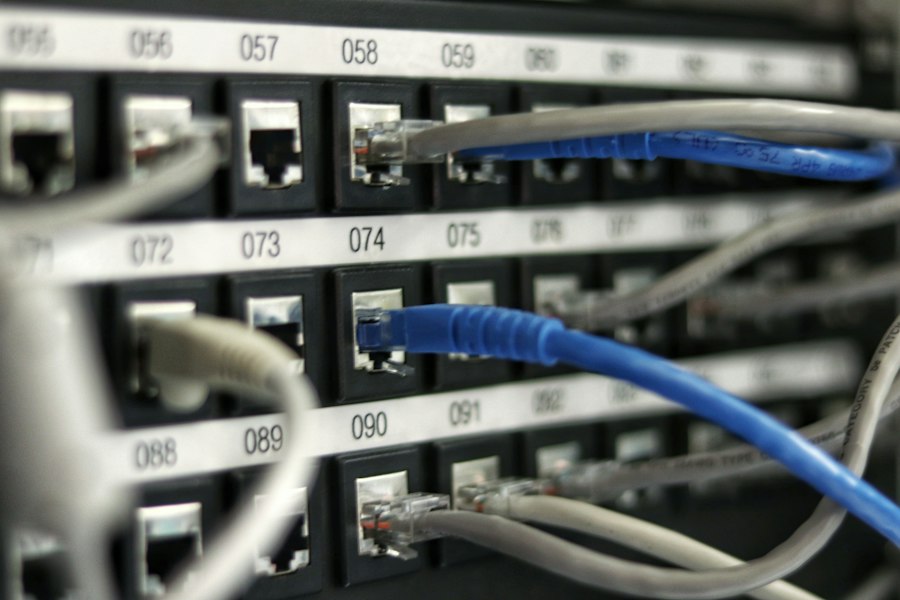 Live
Live
PersistIP
Network engineering for low-latency, DDoS-protected ticket-purchase windows during draw events.
ip.bidua.in
Questions partners and investors actually ask.
Is this legal in India today?
It depends entirely on the state. Lotteries are a state-subject and only certain states permit them. BIDUA will not launch a consumer product in India without explicit, written legal authorization in the target state.
What does 'provably fair' actually mean?
Anyone with the on-chain ticket list and the published VRF proof can mathematically re-derive the winning ticket. There is no internal database BIDUA could secretly change.
How is randomness generated?
Chainlink VRF (Verifiable Random Function) is the primary source. The output comes with a cryptographic proof posted on-chain. A drand-based fallback is wired in for redundancy.
How fast are payouts?
Once the VRF proof is verified on-chain, the smart contract releases the prize to the winning ticket holder's wallet automatically — typically within 60 seconds of draw completion.
What about tax on winnings?
For Indian-permitted deployments, 30% TDS under section 194B is withheld at source by the contract itself before payout, in full compliance with the Income Tax Act.
Can BIDUA cheat the draw?
No — that is the entire design point. The randomness comes from an external oracle network, the ticket ledger is public, and the payout logic is in immutable code. The only way to 'cheat' would be to compromise the oracle, which is detectable.
Who runs the consumer-facing brand?
Under the B2B-first plan, the consumer brand is the licensed operator (a state lottery, a charitable trust, or an offshore licensee). BIDUA is the platform underneath, not the public face.
What about responsible gaming?
Self-exclusion registers, deposit limits, age-gating and cooling-off periods are mandatory product features — not optional. BIDUA will not deploy to operators who refuse these.
If you're a lawful operator, we'd like to talk.
We are not selling lottery tickets and we are not soliciting players. If you operate a state-licensed lottery, a registered charitable raffle, or an offshore-permitted platform and want to evaluate audit-grade infrastructure, BIDUA's team is open to a confidential conversation.