Eco-Friendly AC Without Compressor
Refrigerant-free, compressor-free, monsoon-aware. Cooling redesigned for the Indian climate from first principles.

Compressor-based air conditioning is one of the worst combinations modern India has inherited from the West: it draws enormous power, leaks high-GWP refrigerants, depends on a stable grid, and works terribly during peak Indian summer afternoons when load-shedding cuts in. Meanwhile, two well-understood alternative cooling technologies — evaporative cooling and thermoelectric (Peltier) cooling — each have weaknesses, but those weaknesses do not overlap.
BIDUA Industries is developing a hybrid room cooler that switches intelligently between evaporative mode (afternoon, dry hours), thermoelectric mode (humid mornings and monsoon), and a combined mode in shoulder hours. Onboard temperature, humidity and dew-point sensors decide the mode in real time. The unit has no compressor, no HFC refrigerant, and no high-pressure components.
The target customer is the Tier-2 / Tier-3 Indian household that today buys a 1.5-tonne split AC reluctantly because a desert cooler stops working in July. We sell them a single appliance that handles both seasons at 20% of the electricity cost.
An Indian summer is brutal, but it is also drier in the afternoon than in the morning. A cooler that understands the difference — and switches between evaporative and thermoelectric modes accordingly — uses a fraction of the power and emits none of the refrigerant.
The opportunity, on its own terms.

India's AC ownership is exploding.
From ~8% household penetration today to a projected 40% by 2037. The grid cannot absorb that load on conventional compressor tech without massive capex.
HFC phase-down is law.
India's Kigali Amendment commitment phases down high-GWP refrigerants. Any cooling product that uses none has a permanent regulatory tailwind.
Thermoelectric module efficiency has improved 40% in a decade.
Bismuth-telluride modules from Japanese and Chinese OEMs now hit COP values that make small-scale cooling commercially sensible — provided you pair them with the right environmental mode.
Naploo, BIDUA Pods and Indian summer all align.
Naploo's hospitality pods, BIDUA Pods' nap furniture and any rural school or clinic needs cooling that survives a 4-hour power cut. A low-wattage hybrid cooler can run on a small solar + battery pack — a compressor AC cannot.
Sized in three rings.
- India sold ~10M room ACs in 2024. Every percentage point of share lost to non-compressor cooling is a meaningful business.
- Average split AC consumes 900–1,500 W. Target hybrid unit at 180–300 W — 80% reduction directly translates to grid relief and consumer bill savings.
- Government LPG-style subsidy chatter exists for low-GWP cooling — early movers benefit if the policy lands.
- Naploo + BIDUA Pods deploy ~3,000 internal cooling units per year — a captive demand floor of approximately ₹6 cr.
How it works, end to end.

Single hybrid SKU first
Launch with one well-engineered floor-standing unit covering a 150 sq ft room — the most common Indian bedroom size. Avoid the trap of fragmenting the SKU early.
Smart mode-switching firmware
Onboard sensors decide between evaporative, thermoelectric and hybrid modes by the minute. Firmware is the moat — competitors can copy hardware, not the algorithm.
Direct-to-consumer + offline
DTC via own website + Amazon for early-adopter urban segment. Partnership with regional cooler distributors (Symphony / Crompton dealer network) for Tier-2/3 reach.
Captive demand
Naploo's hospitality pods and BIDUA Pods' nap furniture are guaranteed early buyers. Internal validation reduces external launch risk.
Service & water-pad subscription
Annual water-pad replacement + descaling service contract (₹600–900 / year) creates recurring revenue and customer touchpoint.
Three compounding phases.
Development
- Internal R&D budget
- Captive sales to Naploo / BIDUA Pods (pilot units)
- BEE star-rating certification work
- Energy efficiency grants (BEE / MNRE)
Launch
- Direct unit sales (₹18–28k retail)
- Annual maintenance contract (₹600–900/yr)
- Hospitality bulk orders
- Solar + cooler bundled package
Scale
- Mass-market unit sales at scale
- Larger SKUs (300 sq ft, central-cooling)
- Carbon-credit aggregation
- Export to South Asia, Middle East, Africa
Patient cadence, deliberate steps.
-
Q1 2027Engineering prototype complete. Field testing in three climate zones — Delhi (dry-hot), Mumbai (humid), Bengaluru (mild).
-
Q3 2027BEE star-rating application submitted. BIS certification process begins.
-
Q1 2028Manufacturing line at BIDUA Pods facility tooled up for first 5,000-unit production run.
-
Q2 2028Commercial launch. Naploo deploys 200 units across hospitality portfolio.
-
2029–2030Scale to 30,000 units/yr. Tier-2/3 dealer network operational.
-
2031–2032Target 150,000 units / year. Launch a higher-capacity SKU for small-office and small-clinic segments.
Who else is here — and why we're different.
- Hybrid switching firmware — unique to BIDUA, hard to reverse-engineer.
- Zero refrigerant — regulatory tailwind that strengthens with every Kigali milestone.
- Solar-pack-friendly wattage — can run on a 400W rooftop solar setup, unlike any compressor AC.
- Captive demand from Naploo and BIDUA Pods de-risks launch.
What can go wrong — and how we plan for it.
Performance gap vs compressor AC in extreme conditions
Mitigation: Honest spec — we sell 'sub-AC cooling at 20% cost', not 'AC replacement'. Marketing aligned to expectation.
Water consumption concerns in evaporative mode
Mitigation: Closed-loop water recovery design. Daily water use under 4 litres in dry mode — lower than a desert cooler.
Thermoelectric module supply concentration
Mitigation: Dual-source Japanese + Chinese suppliers. Long-term offtake. Explore Indian semiconductor fab partnerships for medium-term substitution.
Service network gaps in Tier-3
Mitigation: Partner with existing Symphony / Crompton dealer service networks for warranty fulfilment.
BIS / BEE certification delays
Mitigation: Pre-engagement with certification labs. Hire ex-BEE consultants for the application process.
Connected BIDUA divisions.
Every BIDUA bet feeds something else in the group. This one connects to:
 Live
Live
BIDUA Pods
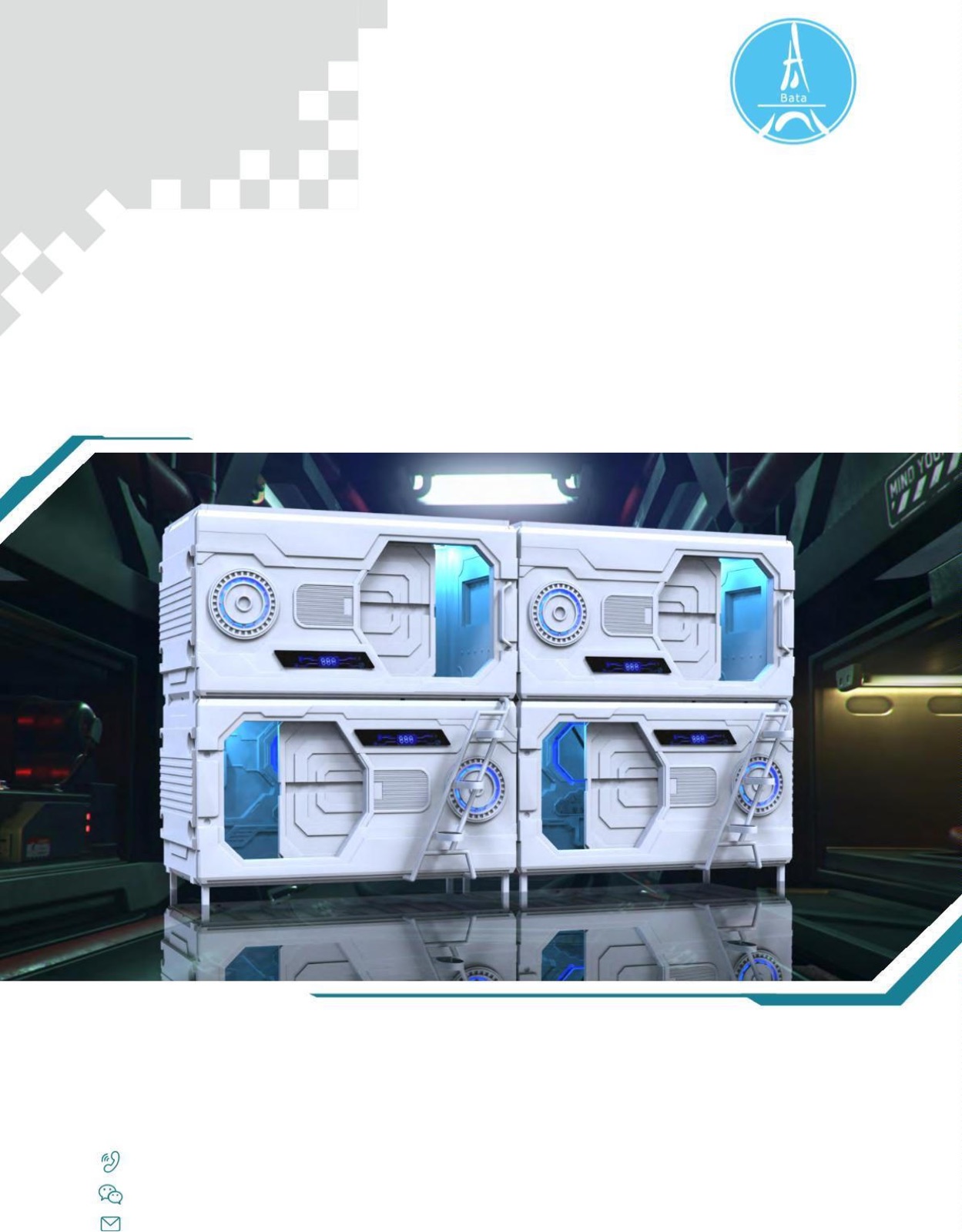
Manufacturing line and captive internal demand from nap-pod cooling needs.
biduapods.com Live
Live
Naploo™ Smart Pod Hotels
Hospitality deployments validate performance and provide early revenue.
naploo.com Live
Live
BIDUA Hosting
IoT telemetry backbone for fleet performance monitoring.
biduahosting.com
Questions partners and investors actually ask.
Is this a desert cooler or an AC?
Neither, and both. It runs in evaporative mode when air is dry, switches to thermoelectric mode when air is humid, and blends them in shoulder conditions. One appliance for the full year.
How cold does it get?
Target 6–10°C below ambient in evaporative mode, 4–7°C below ambient in thermoelectric mode. Not as cold as a split AC — but at one-fifth the power.
What about monsoon humidity?
That is the entire point of the thermoelectric mode — it dehumidifies as it cools, where evaporative coolers fail. Effective up to ~55% relative humidity.
Does it need plumbing?
No. Internal 12-litre water tank, refilled every 2–3 days in dry mode. Optional inlet hose for permanent installation.
Can it run on solar?
Yes — that is a core design constraint. A 400W rooftop solar setup with a small battery can run the unit through the day.
What is the warranty?
3 years on the unit, 5 years on the thermoelectric modules. Annual service contract optional.
What about noise?
Two-fan design with brushless DC motors. Target noise level under 42 dB on medium setting — quieter than most desert coolers and split AC indoor units.
When can I buy one?
Pre-orders open ahead of the Q2 2028 launch. The first 500 units ship at a discounted early-adopter price in exchange for usage telemetry consent.
First-generation buyers wanted.
We are selling 500 units of the launch SKU at near cost to early adopters who agree to share usage data. If you live with Indian summer and an unreliable grid, this is for you.