Education for Rural Areas
Build the learning app that works when the signal doesn't — and rural India will quietly catch up.
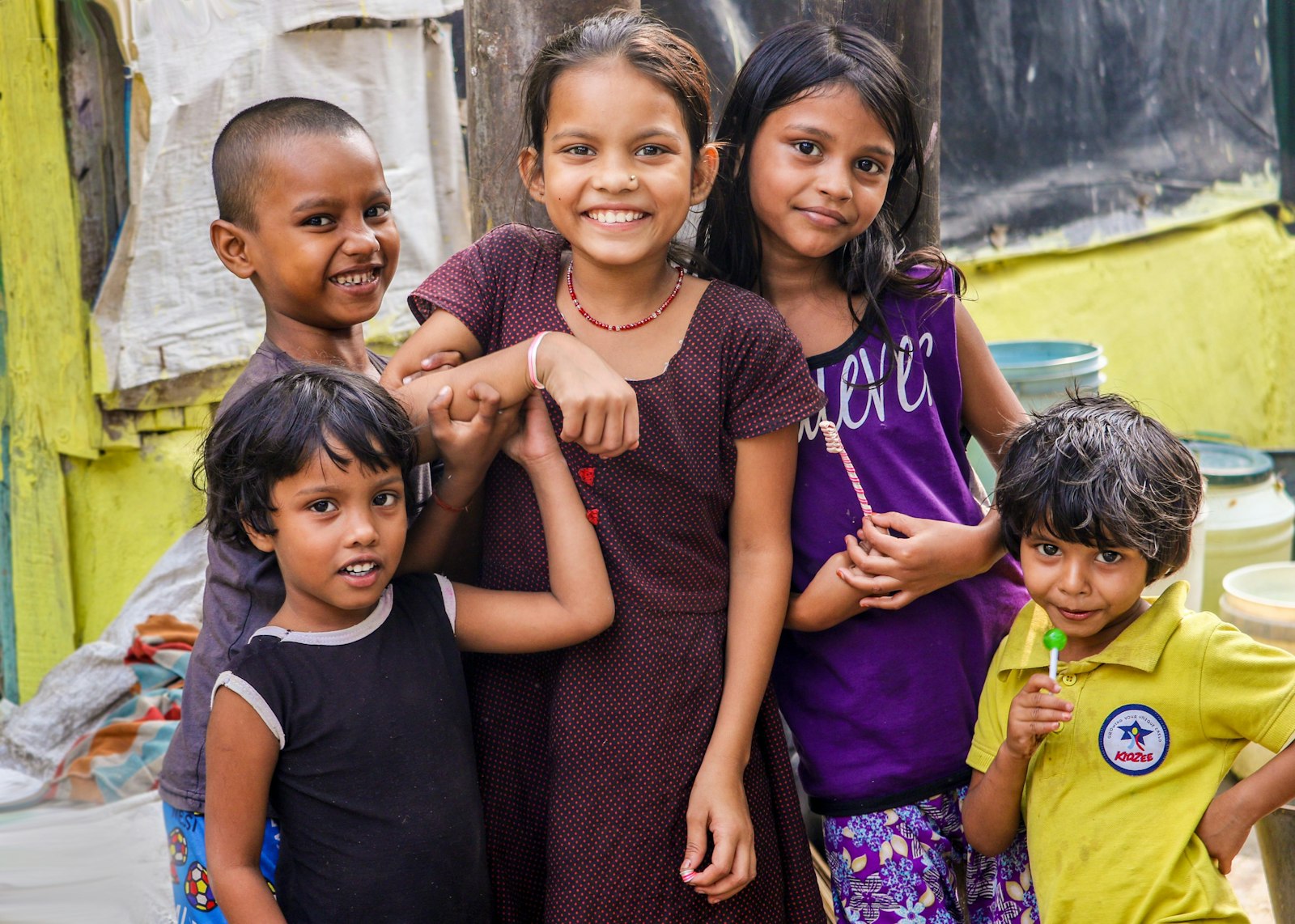
Rural India is roughly 650 million people. They are not under-served by edtech because they don't want to learn — they are under-served because almost every Indian edtech platform was engineered for high-speed home Wi-Fi, English-medium content and a credit-card-equipped parent.
The reality on the ground is a ₹6,000 Android phone, a 2G/3G signal that vanishes for hours every evening, a parent who pays in cash, and a child whose strongest language is Bhojpuri, Marathi, Odia or Tamil — not English.
BIDUA's rural education platform is built for that reality first. Offline-first architecture, lightweight Android-Go-compatible app, regional-language content, government-exam preparation streams, and a price point that does not need a parent to swipe a card. If validated, this becomes the default learning surface in the half of India that edtech forgot.
Byju's was a brilliant product for the families who already had Wi-Fi, English and an iPad. The next half-billion Indian learners have none of those three, and they are not waiting.
The opportunity, on its own terms.

Cheap smartphones have already won.
Sub-₹8,000 Android devices are now in 70%+ of rural households per TRAI's connection data. The hardware problem solved itself — the software gap remains.
The big edtechs retreated.
After Byju's, Unacademy and others scaled back, the field is quieter than it has been in a decade. Capital is finally chasing unit economics, not eyeballs — which favours a low-cost, content-first builder.
Government exams remain the single largest aspiration.
UPSC, SSC, banking, state PSC, railway and defence exams collectively touch ~50 million aspirants a year — and rural India is over-indexed in that pool.
Offline-first is finally engineerable.
Modern progressive web apps, smaller language models running on-device, and aggressive content compression make a usable offline learning experience genuinely possible — which was not true even three years ago.
Sized in three rings.
- Roughly 50 million government-exam aspirants every year — bulk in non-metro India.
- PMGDISHA reached over 6 crore rural citizens with basic digital literacy — a now-trained user base.
- Common Service Centres (~5 lakh nationwide) form a ready offline distribution layer.
- Indian-language internet users are expected to be 90%+ of new growth this decade.
How it works, end to end.

Offline-first app
Content downloads in small bundles when signal is available — typically late night on rural towers — and runs fully offline thereafter. Sync, quizzes and progress upload opportunistically when the network returns. No buffering, no rage-quit.
Regional-language native
Every course shipped in Hindi, Tamil, Telugu, Marathi, Bengali, Odia, Kannada, Malayalam, Gujarati, Punjabi, Assamese and Bhojpuri. Voice-over is by native speakers, not auto-dub — accent matters more than people in metro studios realise.
Government-exam first
Initial content focus on the exams that actually pay rent: SSC CGL/CHSL, banking PO/Clerk, state PSCs, RRB, defence (NDA/CDS), and police constable. Each track has a clear, dated milestone path.
Freemium to ₹49–₹149
Core content free. Paid tier (₹49 basic / ₹149 premium per month) unlocks full mocks, doubt sessions, printed study material at cost, and live revision classes. Annual plans at ~40% discount.
CSC + offline partner network
Common Service Centres, local coaching tutors and stationery shops act as offline activation points — they help rural learners install the app, top up subscriptions in cash, and pick up printed material. They earn a per-activation and per-renewal commission.
Three compounding phases.
Content + distribution build
- Freemium acquisition
- Early subscription revenue (₹49 tier)
- Printed booklet sales via CSC partners
- State-government pilot grants
Monetisation density
- Premium subscriptions (₹149)
- Live class & doubt-clearing bundles
- Recruitment-test placement fees
- Brand partnerships (banks, telcos)
Platform & adjacencies
- Skill-and-job adjacency (links to Idea 115)
- Vernacular content licensing to schools
- Government PPP for digital classrooms
- Anonymised learning-data products
Patient cadence, deliberate steps.

-
Q3 2026Curriculum mapping for SSC CGL, IBPS PO and three state PSCs. Founding editorial team hired in Patna and Hyderabad.
-
Q1 2027Closed beta in 30 villages across Bihar, UP and Odisha. Offline-first engine v1 ships.
-
Q4 2027Public launch in Hindi, Bhojpuri, Marathi and Telugu. Target 5 lakh installs in first six months.
-
2028–2029Cross 50 lakh active learners. Live-class layer adds doubt-clearing in regional languages.
-
2030First two state-government MoUs for digital classrooms in low-internet schools.
-
203112-million-MAU target. Bridge into skills-to-jobs platform (Idea 115) lights up.
Who else is here — and why we're different.
- Offline-first by design, not as an afterthought.
- Regional-language native, voiced by native speakers — not translated subtitles.
- Price point set for cash-paying rural households, not metro UPI users.
- Built on BIDUA Hosting infrastructure for predictable, low-cost backend scaling.
What can go wrong — and how we plan for it.
Content quality at vernacular scale
Mitigation: Regional editorial pods led by ex-coaching faculty; review board sign-off before any content goes live.
Piracy of paid content
Mitigation: Device-bound DRM-lite, watermarked PDFs, frequent content refresh and aggressive renewal incentives that make pirated content stale fast.
Hardware fragmentation
Mitigation: Engineered baseline for Android Go and 2GB-RAM devices. Continuous testing on ₹6k–₹10k handsets that 80% of users actually own.
Low willingness to pay
Mitigation: Hard focus on government-exam outcomes where parents already spend ₹500–₹5,000/month on coaching — we redirect a fraction of that wallet.
Distribution cost in remote markets
Mitigation: Commission-based offline partner network (CSCs, tutors, stationery shops) keeps acquisition cost variable rather than fixed.
Connected BIDUA divisions.
Every BIDUA bet feeds something else in the group. This one connects to:

Questions partners and investors actually ask.
How does the app work without internet?
Content is downloaded in small bundles during whatever connectivity window is available — usually overnight when towers are less congested. After that, all video, quizzes and notes work fully offline. Progress syncs when signal returns.
Which exams will the platform cover first?
SSC CGL and CHSL, IBPS PO and Clerk, three state PSCs (Bihar, UP, Maharashtra), RRB Group D and NTPC, and NDA/CDS. We expand as cohorts mature.
Why such a low price point?
Because rural India pays in cash and pays monthly. ₹49 is a number a household decides on once and stops thinking about. Anything above ₹200 introduces friction we cannot afford.
How do you ensure content quality across 12 languages?
Each language has its own editorial pod led by senior coaching faculty in that language. Nothing publishes without their sign-off — no machine-translated material, ever.
How will users pay in cash?
Through our CSC and local-partner network. The partner accepts cash, activates the subscription on the back end, and earns a commission. Same model that recharges still serves rural India.
Is this a not-for-profit?
No — it is a for-profit social-impact business. We believe the model needs to stand on its own unit economics to last for 20+ years.
Will this work on a ₹6,000 phone?
Yes — that is the baseline we engineer for. Android Go, 2GB RAM and intermittent 2G/3G is the target environment, not the worst case.
How does this connect with BIDUA's other businesses?
Hosting runs the backend, PersistIP secures identity, and the learner graph eventually feeds into our skills-to-jobs platform (Idea 115). Education is the entry point of a longer journey.
Help us pilot in your district.
We are looking for 30 villages across the Hindi belt and southern India for our 2027 beta. If you run a school, a CSC or a local coaching centre, partner with us.