Filling Station
A fuel station built for the next decade — petrol, diesel, CNG, EV fast-charge and a clean store on the highway.
India runs roughly 88,000 fuel retail outlets — and that count is rising. Indian Oil, BPCL and HPCL together hold around 90% of the dealer network, with Reliance, Nayara, Shell and Total Energies taking the remainder. Margins on fuel itself are thin (the OMCs set the dealer commission), but adjacent revenue — CNG, EV charging, convenience stores, ATMs, car wash, vehicle services — has been compounding fast.
Meanwhile the fuel mix is shifting. CNG corridors have expanded under PNGRB; EV adoption crossed 7% of new vehicle sales in 2025 and is forecast at 30%+ by 2030; the Petroleum Ministry's expression-of-interest rounds for new dealerships in 2023–25 explicitly favoured multi-fuel and EV-ready sites.
BIDUA Industries is exploring fuel station franchise ownership as a long-duration real-estate-plus-operations play — high-traffic highway and urban-arterial sites, multi-fuel from day one, with a strong convenience layer (food, vehicle services, clean restrooms) that turns the pump into a 15-minute destination, not a 90-second stop.
The highway dhaba and the petrol pump are the two unchanged businesses on the Indian roadside. The pump is about to change forever — and every honest operator should be planning for both pistons and plugs.
The opportunity, on its own terms.
Multi-fuel is the regulator's preferred dealership format.
Recent PESO and Petroleum Ministry tenders score multi-fuel and EV-ready applications higher — the new dealership economics favour the operator who builds for 2030, not 2018.
EV is additive, not cannibal.
A petrol pump that adds a 60–120 kW DC fast charger captures the EV driver during a 25-minute charge — and that driver spends 3–4× more in the convenience store than a refuelling petrol customer.
Highway expansion is real.
Bharatmala has commissioned 35,000+ km of new and expanded highways since 2017. Each new corridor creates 20–40 new commercially viable fuel station plots.
The CNG network is filling in.
PNGRB's 11th and 12th CGD rounds opened new geographic areas to private CNG retailing — particularly in UP, MP, Rajasthan, Bihar and the northeast — where competition is light and demand is locked-in (autorickshaws, cabs, light commercial).
Sized in three rings.
- A mature highway pump throws off ₹40–80 lakh/year of net profit (after dealer commission) plus convenience-store EBITDA.
- EV fast-charging gross margin is ₹6–12 per kWh — at 80 kWh per session and 12 sessions/day, ₹25–35 lakh/year per charger.
- Convenience-store revenue per visit at an Indian highway site averages ₹180–260 — a 3–5× multiple of US norms.
- Land appreciation on highway-adjacent plots in growth corridors has compounded at 12–18% annually over the last decade.
How it works, end to end.
Dealership + land ownership
BIDUA acquires (or long-leases) corner plots on national highways and state arterial roads — 1.5–2 acres for full multi-fuel layout. Dealership awarded by an OMC (IOCL, BPCL or HPCL) through their public tender process.
Multi-fuel pad design
Petrol + diesel + CNG (via PNGRB-licensed CGD partner) + DC fast-charging (60–120 kW Bharat DC-001 / CCS2). Designed for a single visit to satisfy any powertrain.
Convenience layer
200–400 sq ft store with branded snacks, hot beverages, packaged food, clean restrooms (paid model), ATM, and air/water/wash bay. Optional QSR franchise (Chai Point, Cafe Coffee Day, Haldiram's takeaway) on larger sites.
Vehicle services bay
Tyre pressure, basic engine oil top-up, wiper-fluid, vehicle wash, AdBlue. Higher-traffic sites add a tyre shop and battery-service tie-up.
Dealer + operations split
BIDUA holds the dealership and owns the asset. Day-to-day operations run by a salaried site manager + trained pump staff. Standard operating procedures and central audits across sites.
Three compounding phases.
Pilot site
- Petrol & diesel dealer commission
- CNG sales margin (CGD revenue share)
- Convenience store revenue
- Vehicle wash and air/tyre services
Cluster scale-up
- EV DC fast-charging revenue
- QSR / coffee franchise rental
- ATM rental income
- Highway advertising / branded signage
Brand & adjacency
- Multi-site branded loyalty programme
- Trucker amenities (parking, washroom, dorm)
- Vehicle service tie-ups (battery, tyre, lubricant retail)
- Land appreciation on owned plots
Patient cadence, deliberate steps.
-
Q3 2026Site identification across 3 highway corridors (Delhi–Jaipur, Lucknow–Varanasi, Bengaluru–Mysuru). OMC dealership EOI applications filed.
-
Q2 2027First site allotment received. PESO, NOCs, and PNGRB CNG partnership signed. Construction begins.
-
Q4 2027First multi-fuel BIDUA station commissioned. EV charging live from day one. Convenience store and wash bay operational.
-
2028Sites 2 and 3 commissioned. Loyalty programme launched. QSR partnership signed for highway sites.
-
20295-site milestone. EV charging utilisation crosses 25%. Trucker-amenity SKU added on highway sites.
-
20308–12 site network. Dedicated central ops team. Brand ready for next-stage scaling — either organic to 25 sites or strategic partnership with a fleet operator.
Who else is here — and why we're different.
- Multi-fuel from day one — built for 2030, not 2018.
- Convenience layer treated as a real business, not an afterthought.
- Highway-and-arterial focus, not urban infill — better unit economics and land appreciation.
- BIDUA brand overlay across sites — loyalty, signage, audit standards, customer experience.
What can go wrong — and how we plan for it.
Dealership allotment delay or rejection
Mitigation: Apply for 8–12 sites in parallel across multiple OMCs and states. Engage dealership consultants familiar with PESO and PNGRB norms.
Fuel margin compression
Mitigation: Dealer commission is set by OMC and government — not controllable. Mitigation is non-fuel revenue: target 30%+ of EBITDA from convenience, EV, services.
EV adoption faster or slower than forecast
Mitigation: Modular charging design — start with two 60 kW DC chargers, expandable to six. We add capacity in step with utilisation, not on a leap of faith.
Land/title disputes
Mitigation: Title verification by reputable law firm, prefer free-hold over lease-hold. Avoid sites with any pending litigation, regardless of price.
Theft / fuel adulteration / pilferage
Mitigation: Automated tank-gauging, CCTV with central monitoring, monthly density audits, GPS-sealed inbound tankers. Industry-standard but rigorously enforced.
Connected BIDUA divisions.
Every BIDUA bet feeds something else in the group. This one connects to:
 Live
Live
Naploo™ Smart Pod Hotels
Highway sites near hospitality corridors create natural co-location opportunities with Naploo properties (trucker dorm, traveller stop).
naploo.com Live
Live
FinWault
Loyalty wallet, fleet-card programme and UPI-Autopay billing for B2B fleet customers — built on FinWault primitives.
finwault.com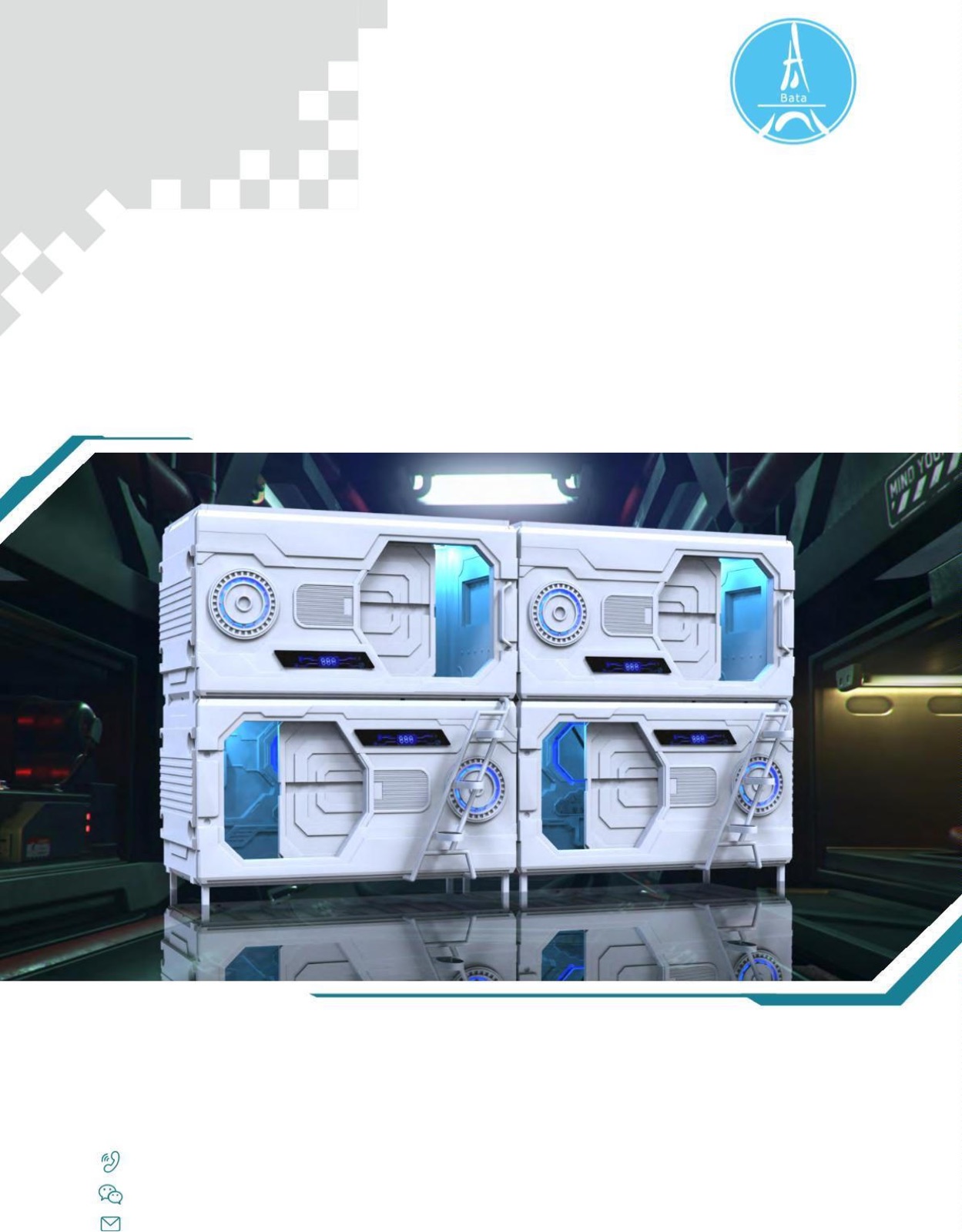 Live
Live
BIDUA Pods
Modular pod-based restrooms, dorms and convenience-store units sourced from BIDUA Pods for faster site commissioning.
biduapods.com
Questions partners and investors actually ask.
How does a fuel station franchise actually get awarded?
Through public tender by an OMC (IOCL, BPCL, HPCL) under defined location lists. Applicants compete on land suitability, financial capacity, and a points-based evaluation. The process is well-defined but takes 9–18 months.
What's the capex for a multi-fuel station?
₹3.5–5 crore for a mid-sized multi-fuel highway site, excluding land. Petrol/diesel tanks and dispensers: ~₹1.4 cr. CNG infrastructure: ~₹70 lakh. EV chargers (2 × 60 kW): ~₹35 lakh. Convenience store + civil + canopy: ~₹1 cr. Working capital + contingency: ~₹50 lakh.
How much does the dealer earn per litre?
Dealer commission is regulated and currently in the band of ₹2.7–4.5 per litre depending on fuel type and OMC. The real profit lever is throughput, not per-litre margin.
Is EV charging actually profitable?
Yes, at utilisation above 15%. At 80 kWh per session, ₹8/kWh margin, and 10–12 sessions/day, a single DC charger crosses ₹25 lakh/year of gross margin. Highway corridors hit utilisation faster than urban sites.
What about land — buy or lease?
Preference is freehold purchase on growth-corridor plots — the land appreciation is a meaningful part of the long-term return. Long-term lease (29 years+) is acceptable on premium urban sites where freehold is impossible.
Do you partner with the convenience store?
Yes — typical model is BIDUA-owned store with branded products plus a franchised QSR (Chai Point, CCD Express, Haldiram's takeaway) on higher-traffic sites. Pure rental income from the QSR; full margin retention from the store.
Can I co-invest in a single site?
Yes. We are open to local land partners contributing the plot in return for an equity stake in that site's operating company. Standard structures, transparent accounting.
Operate the next BIDUA fuel station.
We are evaluating land partners, dealership co-applicants and site operators for the 2027 rollout across three highway corridors. Long horizon, large capex, durable asset.