Free Electricity (Magnetic Motor)
The honest case for — and against — building a self-running magnetic motor in an Indian village.
A self-rotating magnetic motor — a machine that spins continuously from the force of permanent magnets alone — would, if it worked, end energy poverty overnight. It is also one of the oldest unrealised dreams in engineering, stretching from medieval perpetual-motion sketches to modern garage videos that never survive independent verification.
BIDUA Industries is openly exploring this space as a long-shot R&D programme, not a commercial product. Our hypothesis is narrow: while a true closed-loop free-energy device contradicts the laws of thermodynamics as we understand them, the act of trying — building precision magnetic assemblies, low-friction bearings, sensor arrays and control electronics — produces commercially valuable side-technologies for rural micro-power.
If validated, even partially, the platform could become a low-cost auxiliary generator paired with solar, wind or biogas. If it fails — which is the more probable outcome — we will have built a serious magnetics lab in Noida and trained engineers who can pivot to motor design, EV traction and induction-cooktop manufacturing for the rest of the BIDUA group.
Every generation of engineers has chased a magnetic perpetual motor and lost. We are not promising we will succeed. We are promising that if we attempt it, we will document every failure honestly — and that the side-discoveries will be worth more than the dream.
The opportunity, on its own terms.

India's rural power gap is still real.
Despite Saubhagya electrification claims, large parts of Jharkhand, Odisha, Bihar and the North-East get fewer than 12 hours of stable grid power a day. Any genuine breakthrough in distributed generation has an enormous home market.
Rare-earth magnetics are finally affordable.
Neodymium and samarium-cobalt magnet prices have stabilised after a decade of Chinese supply growth. High-grade N52 magnets are now available to Indian R&D labs at one-tenth their 2010 cost.
Open-source instrumentation makes honest testing cheap.
Hall-effect sensors, torque transducers, micro-controllers and data loggers cost a few thousand rupees each. We can measure every claim in real time and publish the data — closing the loophole that lets unreplicable demos circulate online.
The side-economy is the actual prize.
Even if the core motor never closes the loop, the magnetic assemblies, custom bearings and control firmware feed directly into India's EV motor and BLDC fan industries, which are growing 25%+ annually.
Sized in three rings.
- 300M+ Indians live with under 12 hours of stable grid power per day (CEEW survey).
- Diesel-genset operating cost in remote belts: ₹7–9 per kWh — the threshold any alternative must beat.
- BLDC motor market in India: ~₹6,000 cr in 2026, growing 22% YoY — a credible pivot if the core idea fails.
- Government Rural Electrification Corporation budgets — early-stage R&D grants available under MNRE for credible labs.
How it works, end to end.
R&D-first, not product-first
BIDUA funds a dedicated 3-engineer magnetics lab in Noida for 36 months. No revenue projection in this phase — only milestone-gated science. Failure is an acceptable outcome if documentation is rigorous.
Open instrumentation
Every prototype is tested with calibrated torque sensors, energy-in / energy-out logging and third-party review. Raw data is published quarterly. This protects BIDUA's reputation regardless of outcome.
Side-tech commercialisation
Custom magnetic rotors, precision bearings, sensor firmware and low-RPM generator coils developed during the programme are sold or licensed to EV, fan and pump manufacturers — generating revenue even if the headline device never works.
Conditional rural deployment
Only if an IIT or NPL panel certifies a working device do we move to field pilots. Initial 100 units would go to BIDUA-selected villages at cost, with a 12-month telemetry contract.
IP and licensing
PersistIP handles patent strategy. Any genuine breakthrough is licensed globally; failed branches are released as open hardware so the community can pick them up.
Three compounding phases.
Research
- MNRE / DST research grants
- Side-revenue from magnetic component contracts
- Internal BIDUA cross-charge for BLDC fan / EV motor consulting
- Lab tour & education programmes for engineering colleges
Validation or pivot
- Conditional pilot sales (₹35–50k per unit, only post-validation)
- Licensing of motor sub-assemblies
- Custom rotor manufacturing for third parties
- Government rural-electrification tenders
Scale or wind-down
- Hybrid solar-magnetic generator product line (if validated)
- Component supply to EV OEMs (pivot path)
- Open-source IP licensing fees
- Patent litigation defence services (PersistIP synergy)
Patient cadence, deliberate steps.
-
Q2 2027Magnetics lab commissioned in Noida. Three full-time engineers, advisory board from IIT Delhi / IIT Kanpur.
-
Q4 2027First test rig — Bedini-style pulse motor — built and instrumented. Data published openly.
-
Q3 2028Honest interim report at 18 months. Continue, pivot or wind down based on measured net energy.
-
2029Side-revenue from BLDC and BLAC motor consulting expected to cover ~40% of lab burn.
-
2030Decision gate — either IIT-validated prototype enters pilot, or programme converts fully to a motor-design house for EV OEMs.
-
2031–2032If validated: 100-village field pilot in Jharkhand / Odisha. If not: lab continues as profitable component business.
Who else is here — and why we're different.
- Public honesty — every failed run published openly, unlike the YouTube perpetual-motion economy.
- Pivot built in — magnetic rotor and bearing IP has commercial value even if the headline device fails.
- Indian rural deployment context, not a Western lab toy — every spec is set by what a Jharkhand village actually needs.
- PersistIP-led patent strategy ensures any real breakthrough stays under Indian ownership.
What can go wrong — and how we plan for it.
Core science doesn't work
Mitigation: Programme is explicitly structured to deliver side-commercial value (motors, rotors, bearings) regardless of headline outcome.
Reputational risk from association with 'free energy' claims
Mitigation: All public communication is conditional, peer-reviewed and data-backed. No marketing until IIT panel validation.
Engineer attrition
Mitigation: Long-term equity-linked retention, IIT advisory board credibility, clear pivot paths into EV / BLDC careers.
Regulatory misclassification (perpetual motion banned in many patent offices)
Mitigation: PersistIP files patents on the validated sub-systems, not the closed-loop claim, until physics is conclusively demonstrated.
Capital drag on the group
Mitigation: Capped lab budget; gated 18-month and 36-month decision points with explicit kill criteria.
Connected BIDUA divisions.
Every BIDUA bet feeds something else in the group. This one connects to:
 Live
Live
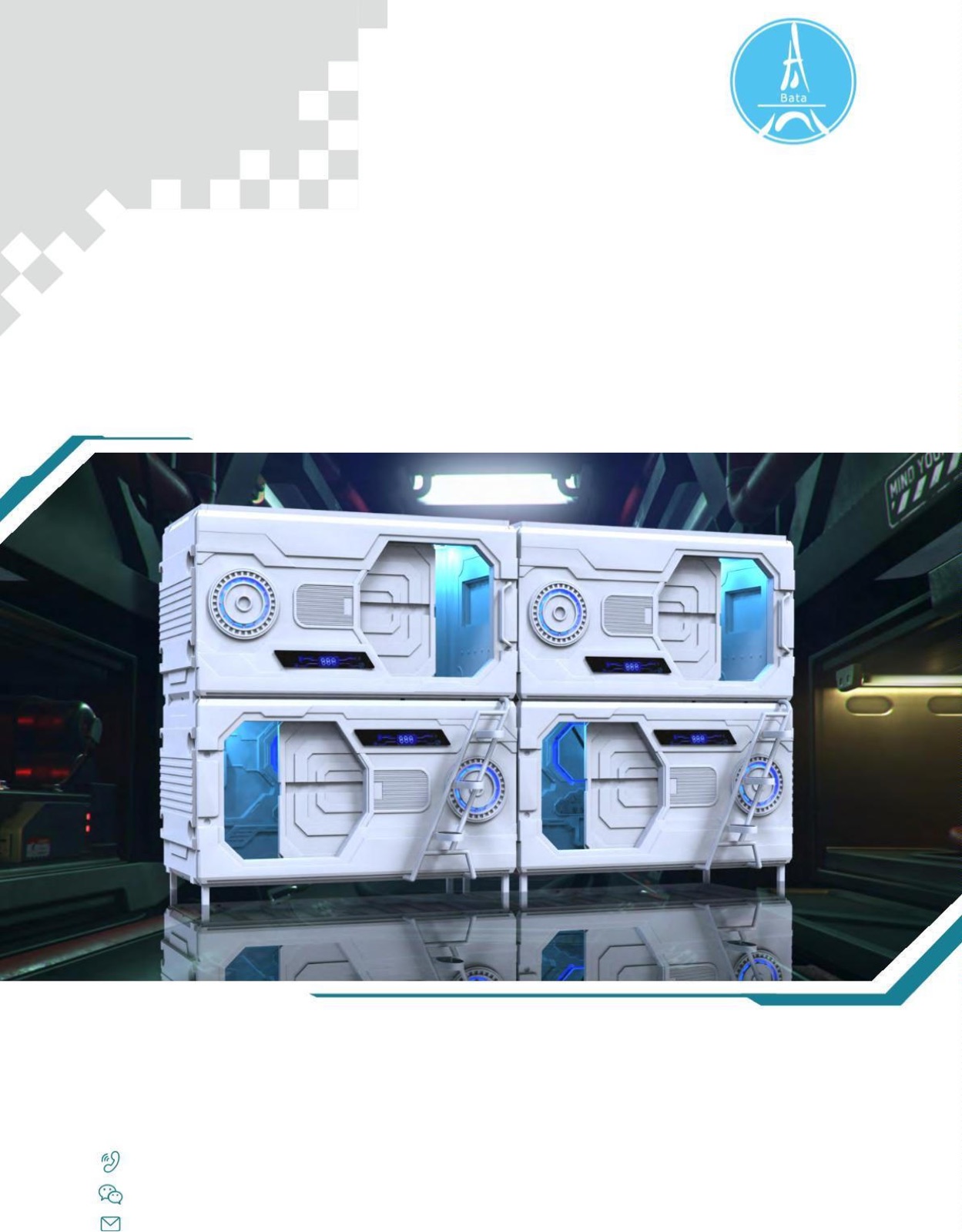
BIDUA Pods
Precision manufacturing capability and rural deployment logistics for any field pilot.
biduapods.com Live
Live
PersistIP
Patent strategy and IP defence for any validated breakthrough.
ip.bidua.in Live
Live
BIDUA Hosting
Telemetry, data logging and remote-monitoring backbone for field-deployed units.
biduahosting.com
Questions partners and investors actually ask.
Does BIDUA believe perpetual motion is possible?
No, not in the textbook sense. We believe the experimental space around magnetic energy storage and pulsed motors is under-explored, and that honest research there will produce commercially valuable side-tech even if no closed-loop device emerges.
How is this different from the free-energy YouTube content?
Calibrated instruments, third-party review, published raw data, and explicit kill criteria at 18 and 36 months. We expect to fail publicly, not succeed quietly.
What is the budget?
Capped lab burn of approximately ₹3.5–4.5 crore over 36 months. Beyond that, the programme must self-fund through side-revenue or be wound down.
Who validates the science?
An external advisory panel drawn from IIT Delhi, IIT Kanpur and the National Physical Laboratory. No internal claim is treated as proven until they sign off.
If it works, who owns it?
BIDUA Industries holds the operating IP via PersistIP. Founding engineers receive equity. Field-deployment partners do not get core IP — only manufacturing rights.
Why not just build solar microgrids?
We support solar — but solar alone does not solve night-time and monsoon-week reliability in rural India. Any auxiliary generator that runs without fuel would be transformative.
Can outside investors participate?
Not in the early R&D phase. We will only open investment post a successful validation gate. The current programme is funded entirely from BIDUA group capital.
What happens if it fails?
The lab continues as a profitable precision-magnetics and motor-design business serving the Indian EV and BLDC industries. The team's careers are not tied to the headline outcome.
Sceptical engineers wanted.
We are not hiring believers. We are hiring rigorous magnetics engineers, EE PhDs and instrumentation specialists who want to test the claim properly — and pivot fast if it fails.