Hospital Incinerator
Every hospital generates 2 kg of bio-medical waste per bed per day. The country has nowhere near enough capacity to handle it.

India generates 743 metric tonnes of bio-medical waste every single day. Bio-Medical Waste Management Rules 2016 (amended 2018) require this to be processed in approved Common Bio-Medical Waste Treatment Facilities (CBWTFs) — but the country has only 229 of them, with severe geographic gaps in tier-2 and tier-3 districts where new hospitals are being built fastest.
Hospital Incinerator is BIDUA's entry into the regulated environmental services category — a two-pronged business: (1) manufacture and sell compliant medical-waste incinerators to hospitals, CBWTFs and waste-management operators across India, and (2) operate captive on-site incineration services for large hospital groups under long-term contracts.
If validated, the business sits squarely inside CPCB-regulated infrastructure — emissions compliant (Particulate <50 mg/Nm³, HCl <50 mg/Nm³, dioxins/furans <0.1 ng-TEQ/Nm³), built around proven dual-chamber pyrolytic incineration technology, with optional electrostatic precipitators and wet scrubbers. It is a long-cycle infrastructure business with high barriers and recurring AMC revenue.
Bio-medical waste is the part of healthcare nobody photographs — but it is the regulated layer that decides whether a hospital can open its doors tomorrow morning.
The opportunity, on its own terms.
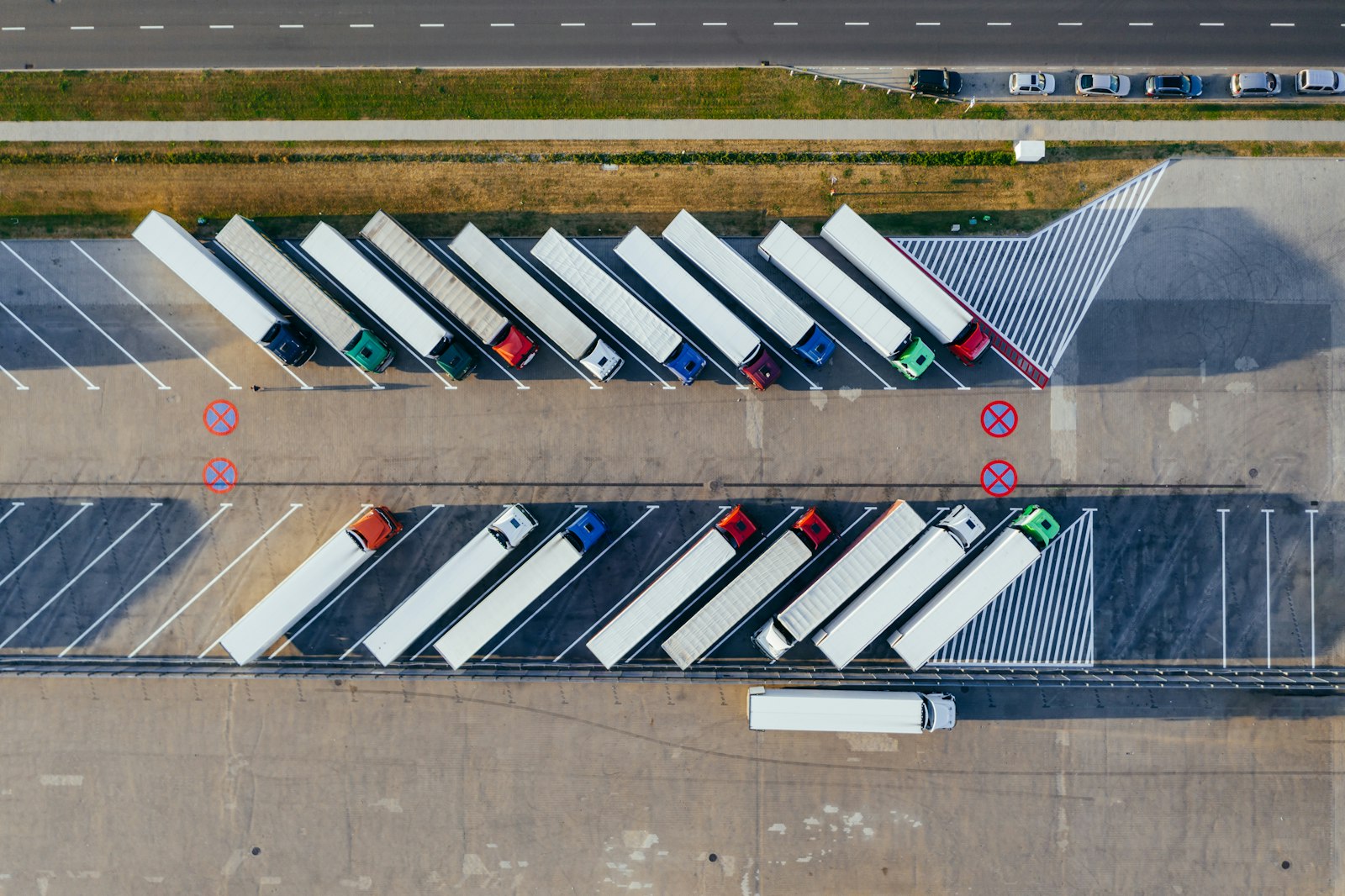
743 MT/day and rising.
Hospital bed capacity in India is growing 8–9% a year. Bio-medical waste volume tracks bed capacity directly — the supply side is permanently behind demand.
Regulatory enforcement has hardened.
State pollution control boards now issue closure notices to hospitals lacking documented waste-disposal contracts. Compliance is no longer optional — it is licensing-critical.
CBWTF capacity gaps in tier-2 cities.
A 200-bed hospital in Indore, Surat or Vizag often has to truck waste 80–150 km. On-site captive incineration becomes economically rational at 100+ beds.
BIDUA Pods manufacturing has industrial overlap.
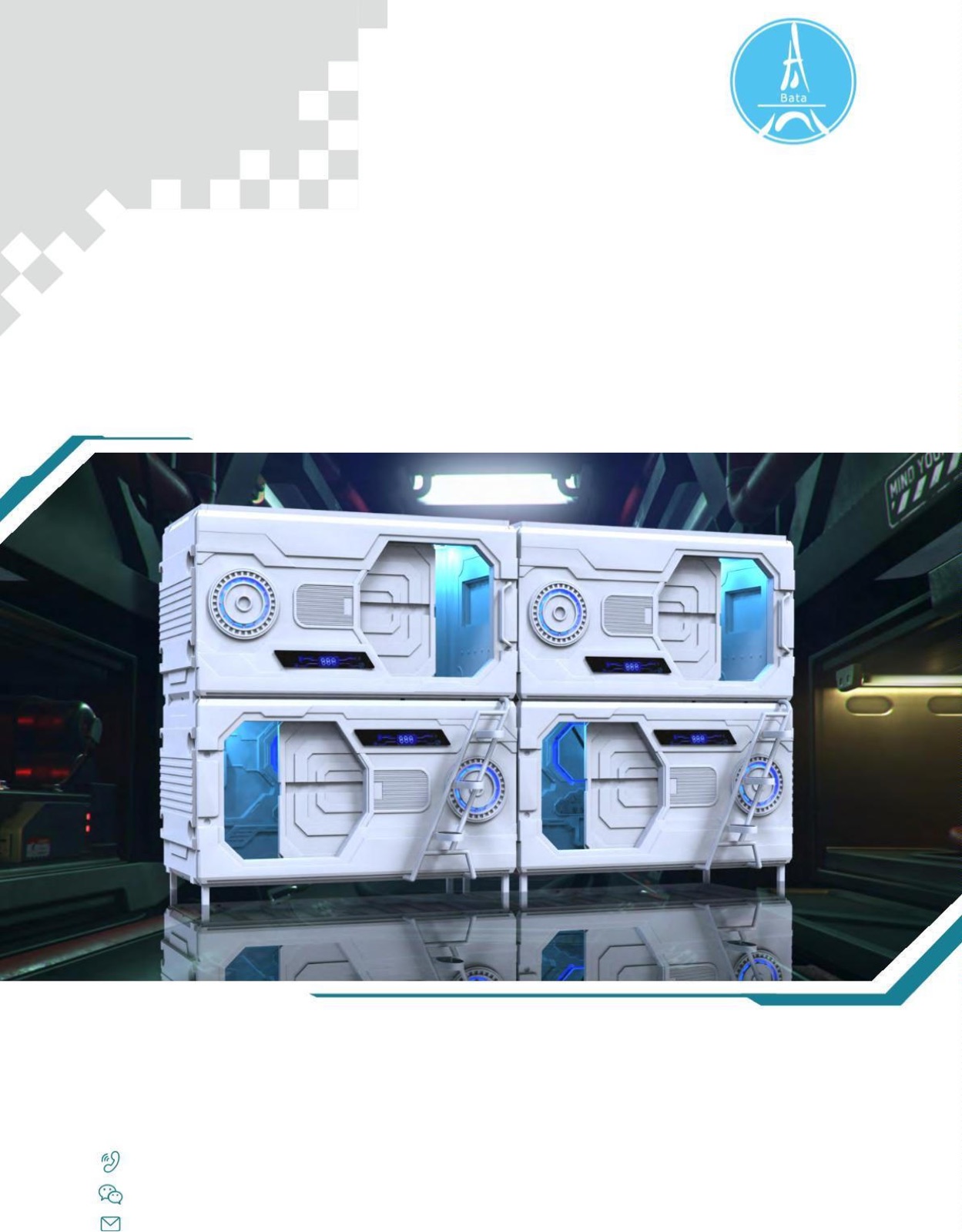
Heavy-gauge steel fabrication, refractory lining work, high-temp engineering — overlapping with our existing pod and partition manufacturing competencies in Noida.
Sized in three rings.
- 50 kg/hr incinerator (mid-size hospital): ₹35–55 lakh per unit.
- 200 kg/hr CBWTF-grade unit: ₹1.6–2.4 cr per unit.
- Annual Maintenance Contract (AMC): 8–12% of equipment value, recurring.
- BOOT (Build-Own-Operate-Transfer) contracts for large hospital groups: ₹4–8 cr per site over 10 years.
How it works, end to end.

Equipment manufacture & sales
Three SKUs: 25 kg/hr (small hospitals, nursing homes), 50 kg/hr (mid-size hospitals), and 200 kg/hr (CBWTFs and large hospital chains). All units CPCB-compliant, dual-chamber pyrolytic, with optional APCD (Air Pollution Control Device) modules — ESPs, wet scrubbers, bag filters.
Annual Maintenance Contracts (AMC)
Every equipment sale comes with a 1-year warranty and an offered 5-year AMC. AMC covers refractory replacement, burner servicing, emission monitoring calibration, and emergency response. Strong recurring margin tail.
Captive on-site operations (BOOT model)
For large hospital groups (300+ beds), BIDUA builds, owns and operates the incinerator on-site under a 10-year service contract. Hospital pays a per-kg processing fee. Lower capex for the hospital, recurring revenue for BIDUA.
CPCB compliance & certification services
Continuous Emission Monitoring System (CEMS) integration, emission-data reporting to state pollution control boards, and consultancy on bio-medical waste rules compliance. A regulated category needs hand-holding — that becomes a billable service.
Spare parts & refractory replacement
Refractory linings need replacement every 3–4 years. Combustion burners, thermocouples, ID/FD fans need periodic replacement. A 10-year customer generates 1.6–2x equipment value in parts and service revenue.
Three compounding phases.
Build & certify
- First-unit CPCB type-test certification
- Pilot equipment sales to 8–12 hospitals
- AMC contracts on installed base
- Government procurement registration (GeM, state DGS&D)
Scale equipment + BOOT
- Direct equipment sales (50–80 units/year)
- BOOT captive operation contracts (5–10 sites)
- AMC revenue compounding on installed base
- Refractory and spare parts revenue
Platform & adjacencies
- Waste-to-energy adjacency (heat recovery units)
- Export to Africa, SEA markets with similar regulation
- Adjacent waste streams (pharmaceutical, agricultural)
- PPP partnerships with municipal corporations
Patient cadence, deliberate steps.
-
Q2 2027Engineering team hired. Dual-chamber pyrolytic prototype design begins at BIDUA Pods Noida facility.
-
Q4 2027First 50 kg/hr prototype built. CPCB type-testing begins at accredited lab.
-
Q2 2028CPCB certification received. First commercial unit installed at a 200-bed hospital partner.
-
2029Production scale to 30+ units/year. First BOOT captive contract signed with a hospital chain.
-
2030–2031200 kg/hr CBWTF-grade unit launched. Export pilot to East Africa. AMC revenue crosses ₹15 cr/year.
-
2032220+ units installed. ₹150 cr revenue run-rate. Waste-to-energy adjacency in pilot.
Who else is here — and why we're different.
- BIDUA Pods Noida manufacturing — high-volume, high-quality steel fabrication already operational.
- BOOT model for large hospitals — reduces their capex while building our recurring revenue.
- Strong service network plan from day one — AMC SLAs measured and published.
- CPCB compliance baked in, with optional CEMS integration as standard.
What can go wrong — and how we plan for it.
Long sales cycles (6–12 months for hospitals)
Mitigation: Parallel BOOT channel offers a no-capex alternative that shortens decision cycles for mid-size hospitals.
Emission compliance failure
Mitigation: Pre-launch CPCB type testing, in-house emission lab, continuous monitoring systems standard, third-party audit annually.
Regulatory shift to centralised CBWTF model
Mitigation: Adapted SKU offering for CBWTFs themselves; BOOT-operated captive units position us as an operator, not just OEM.
Heavy working capital lockup
Mitigation: Advance payment for equipment (30/40/30), AMC paid annually upfront, government order-book financing.
Refractory and burner supply concentration
Mitigation: Multi-vendor sourcing for refractory bricks, in-house burner assembly within 3 years to reduce dependency.
Connected BIDUA divisions.
Every BIDUA bet feeds something else in the group. This one connects to:
Questions partners and investors actually ask.
Is this CPCB-compliant?
Yes — every SKU is engineered to meet the Bio-Medical Waste Management Rules 2016 (amended 2018) emission norms. Type-testing at an accredited lab is part of every product launch.
What capacities are available?
Three primary SKUs: 25 kg/hr, 50 kg/hr, and 200 kg/hr. Custom capacities available for large CBWTF projects.
What does an incinerator cost?
₹35–55 lakh for a 50 kg/hr unit; ₹1.6–2.4 cr for a 200 kg/hr CBWTF-grade unit, depending on APCD configuration. BOOT contracts move the capex off the hospital's books.
What is the BOOT model?
Build-Own-Operate-Transfer. BIDUA installs and operates the unit on-site for a hospital group. The hospital pays a per-kg processing fee. After 10 years, ownership transfers to the hospital.
How is emission compliance verified?
Continuous Emission Monitoring System (CEMS) feeds real-time data to state pollution control boards. We also publish quarterly emission reports per installation.
What's included in the AMC?
Refractory inspection and replacement, burner servicing, thermocouple and emission monitor calibration, emergency response within 24 hours. Tiered AMCs available.
Can this handle COVID-era infectious waste?
Yes — dual-chamber pyrolytic incineration at 850–1100°C is the prescribed treatment for Category-1 infectious waste. CPCB-recognised.
Where will units be manufactured?
At the BIDUA Pods Noida facility — heavy-gauge steel fabrication, refractory lining and assembly are existing competencies we are extending into a new category.
Partner with us on India's bio-medical waste infrastructure gap.
We are pre-screening pilot hospital customers, BOOT partners and government procurement collaborators for the 2028 launch.