Internet Service Provider
The fibre boom skipped small-town India. We're building the network the incumbents won't.
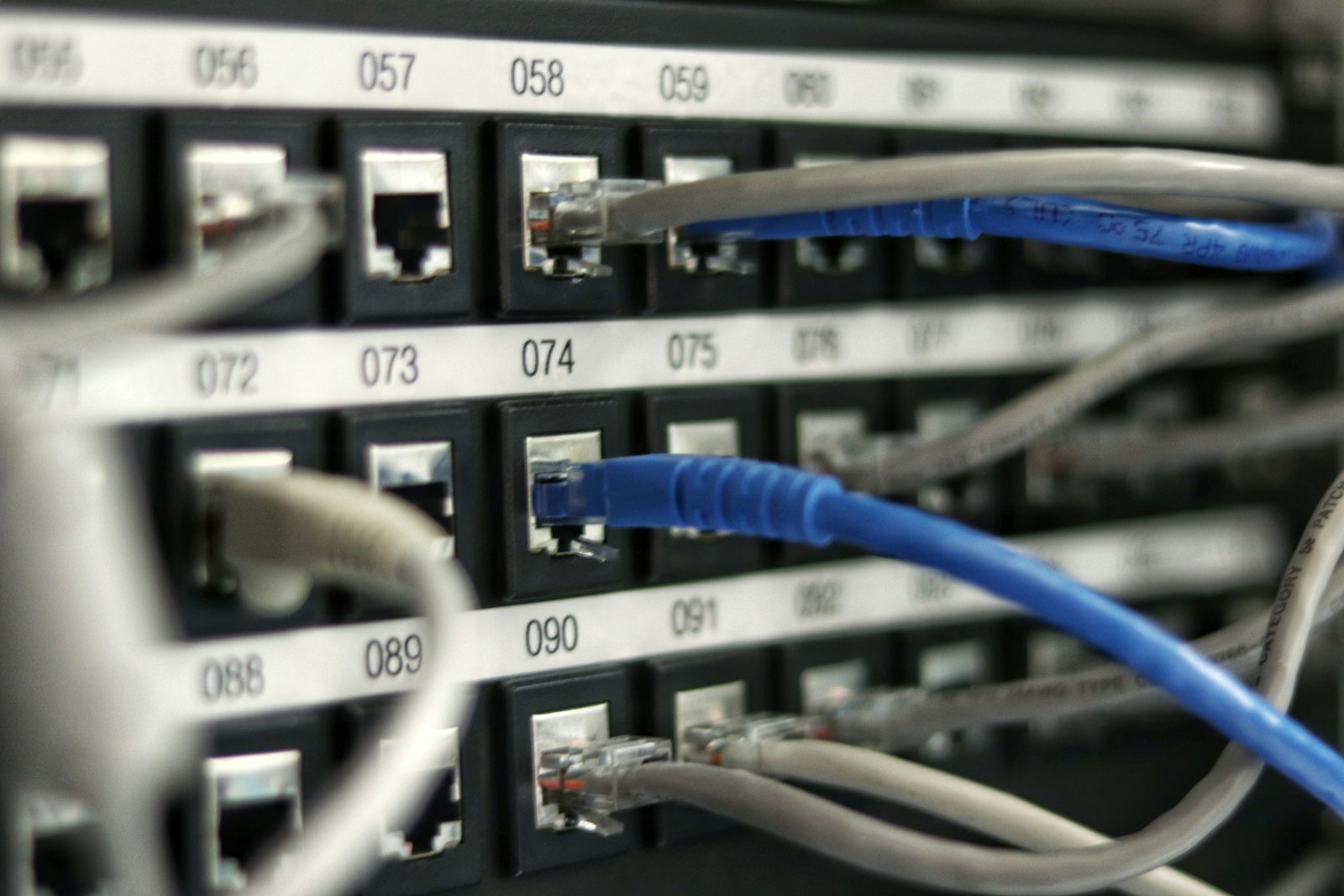
India is the world's second-largest broadband market by users but ranks 79th in average fixed-line speed. The reason is uneven coverage: Jio Fiber, Airtel Xstream and ACT account for 70% of urban FTTH connections, but their economics demand dense apartment clusters. In thousands of tier-3 towns and semi-urban panchayats, the last reliable fibre stops three kilometres outside the bypass.
Where national ISPs won't lay cable, the local LCO (local cable operator) has filled the gap — but most LCOs are sub-scale, run on shared bandwidth at 1:20 contention, and offer no real SLA. Customers tolerate it because there is no alternative.
BIDUA Industries is evaluating a regional ISP play focused on tier-3 towns and semi-urban clusters in north and central India — own fibre to the last mile, own the customer relationship, and build on shared infrastructure with PersistIP (our networking arm) and BIDUA Hosting (our cloud arm) for a stack no LCO can match.
Jio gave India internet. It did not give every Indian street a wired connection. The last-mile fibre map of tier-3 India still has more blank squares than coloured ones.
The opportunity, on its own terms.
TRAI's last-mile policy is now LCO-friendly.
Right-of-way costs in non-metro municipalities have been capped, and the National Broadband Mission has earmarked subsidies for tier-3 fibre rollouts — a structural cost floor that did not exist five years ago.
Work-from-home stuck.
Even after 2023, tier-2/3 cities retained 18–25% of their hybrid workforce — and that workforce will not tolerate a 4 Mbps cable connection. The willingness-to-pay has stepped up permanently.
BharatNet middle-mile is finally usable.
GPON-ready dark fibre is available at sub-₹400/Mbps wholesale in most district headquarters — a 70% drop from 2020. The middle-mile economics finally make last-mile retail profitable.
OTT and gaming are pulling demand.
A single Hotstar 4K stream or a Call of Duty Mobile session can saturate a 10 Mbps LCO line. Customers know the difference now.
Sized in three rings.
- India's fixed-line broadband penetration is 9 per 100 households vs 100+ in Korea and 60+ in China — structural runway.
- Average tier-3 broadband ARPU has climbed from ₹350 in 2019 to ₹520 in 2025 (TRAI Q4 indicators).
- Bundled OTT (Hotstar, Sony, Zee) adds ₹120–180/month of ARPU at minimal incremental cost.
- Enterprise ILL and SD-WAN contracts in tier-3 industrial estates carry 3–5× the margin of home connections.
How it works, end to end.

Own last-mile fibre
Self-laid GPON optical network from a town's BharatNet PoP to the customer's ONT. Per-km capex is ~₹35–55,000 depending on terrain and pole vs duct mix. Useful life: 15+ years.
Leased middle-mile
Long-term IRU (indefeasible right of use) capacity contracts with BharatNet, Railtel and Powergrid Telecom — avoids the capex of inter-city backhaul while locking pricing for 5–10 years.
Three-product offer
Home (100/200/400 Mbps unlimited), Business (static IP, SLA, dedicated bandwidth), and Enterprise/ILL for industrial estates. Same fibre, three SKUs.
Bundled value-adds
Free OTT bundle (Hotstar Mobile, SonyLIV, Zee5), bundled BIDUA Hosting credits for small businesses, and optional managed Wi-Fi mesh from PersistIP-supplied routers.
Ground-team economics
One field engineer per ~600 home connections, one NOC engineer per 5,000 connections. Salaried, not contractor — because in this business, mean-time-to-repair is the only metric customers actually feel.
Three compounding phases.
First town
- Home FTTH subscriptions
- Installation fees
- Static IP add-ons
- Mesh router rentals
Town cluster
- Business broadband (SMB)
- Bundled OTT revenue share
- Enterprise leased lines (ILL)
- Wi-Fi installation services
Regional ISP
- SD-WAN managed services (cross-sell from PersistIP)
- Co-located server hosting (cross-sell from BIDUA Hosting)
- CCTV-as-a-service over fibre
- Government / education connectivity tenders
Patient cadence, deliberate steps.
-
Q2 2027License application filed with DoT for UL-VNO (Unified License – Virtual Network Operator) Category B.
-
Q4 2027First pilot town in western UP. 30 km of fibre laid, NOC operational, 500 founding customers onboarded.
-
2028Expansion to 4 adjacent towns sharing the same NOC. Business broadband product launched.
-
202920,000-subscriber milestone. Upgrade to ISP-A license. First enterprise/ILL contract signed in an industrial estate.
-
2030Regional cluster of 12 towns. CCTV-over-fibre and managed Wi-Fi launched as separate revenue lines.
-
2031100,000-subscriber target. Operations move from single-state to two-state coverage. Brand ready for strategic infrastructure investor round.
Who else is here — and why we're different.
- Tier-3-first network design — no metro retrofit.
- Real SLA with credit notes — almost unheard of below tier-1 in India.
- Cross-stack synergy with BIDUA Hosting and PersistIP for business customers.
- Salaried field engineers, not commission-only contractors — mean-time-to-repair below 4 hours.
What can go wrong — and how we plan for it.
Right-of-way (RoW) disputes with municipalities
Mitigation: Engage municipal corporations 6 months pre-rollout. Pre-pay RoW for 5 years. PM-Gati Shakti portal pre-filings.
Cable cut / vandalism
Mitigation: Mix of aerial and underground fibre. Redundant ring topology — single cut never takes a town offline. Insurance against cable damage.
Pricing war from Jio Fiber
Mitigation: Compete on service, not price. SLA-backed business connections are insulated from consumer pricing wars.
License / regulatory tightening
Mitigation: UL-VNO under TRAI is a stable regime. Active engagement with state ISP associations and DoT regional offices.
Fibre capex over-runs in difficult terrain
Mitigation: Town-by-town go/no-go gate after feasibility survey. No town entered until ARPU × addressable households exceeds 1.8× projected capex.
Connected BIDUA divisions.
Every BIDUA bet feeds something else in the group. This one connects to:
 Live
Live
BIDUA Hosting
Last-mile customers become natural hosting customers — bundled cloud and email for SMBs.
biduahosting.com Live
Live
PersistIP
PersistIP supplies routers, mesh access points and SD-WAN — shared procurement reduces hardware cost 15–20%.
ip.bidua.in Live
Live
FinWault
FinWault primitives power the customer billing portal, autopay and SMB credit assessment.
finwault.com
Questions partners and investors actually ask.
Why compete with Jio?
We don't, in cities. Jio is unbeatable in metros. We operate where Jio's last-mile maths breaks down — towns of 30,000–250,000 people with no apartment density.
What licenses are required?
UL-VNO Category B with DoT to start, upgraded to full ISP-A license at the 50,000-subscriber threshold. Both are stable, well-trodden regimes.
What's the capex per town?
₹1.2–2.2 crore for a 25–40 km fibre town, plus ₹15–25 lakh for the local NOC and CPE inventory. Payback at 24 months at ~3,500 subscribers.
How will customer support work?
Local NOC + WhatsApp-first support with 4-hour mean-time-to-repair SLA on the Home Plus tier and 2-hour on Business. Credit notes for SLA breach are auto-issued.
Can existing LCOs partner with you?
Yes. We are open to acquiring or partnering with established LCOs who have customer relationships but lack the capital for fibre and the technology stack for billing/NOC.
Is this profitable at ₹499/month?
At 50%+ tree-fill in served buildings, yes. Variable cost per home is ~₹140/month at our wholesale bandwidth tariffs. The economics break if tree-fill stays below 25% — which is why town selection matters more than anything else.
Will you offer mobile services?
Not in the foreseeable future. We are a fixed-line specialist. Bundling MVNO offers may be evaluated post-2031.
Bring real fibre to your town.
We are evaluating pilot towns in UP, Bihar, MP and Rajasthan for the 2027 rollout. Municipal partners, property developers and franchise operators welcome.