Laundry Project
Indians spend Sundays washing clothes. We want them spending Sundays anywhere else.
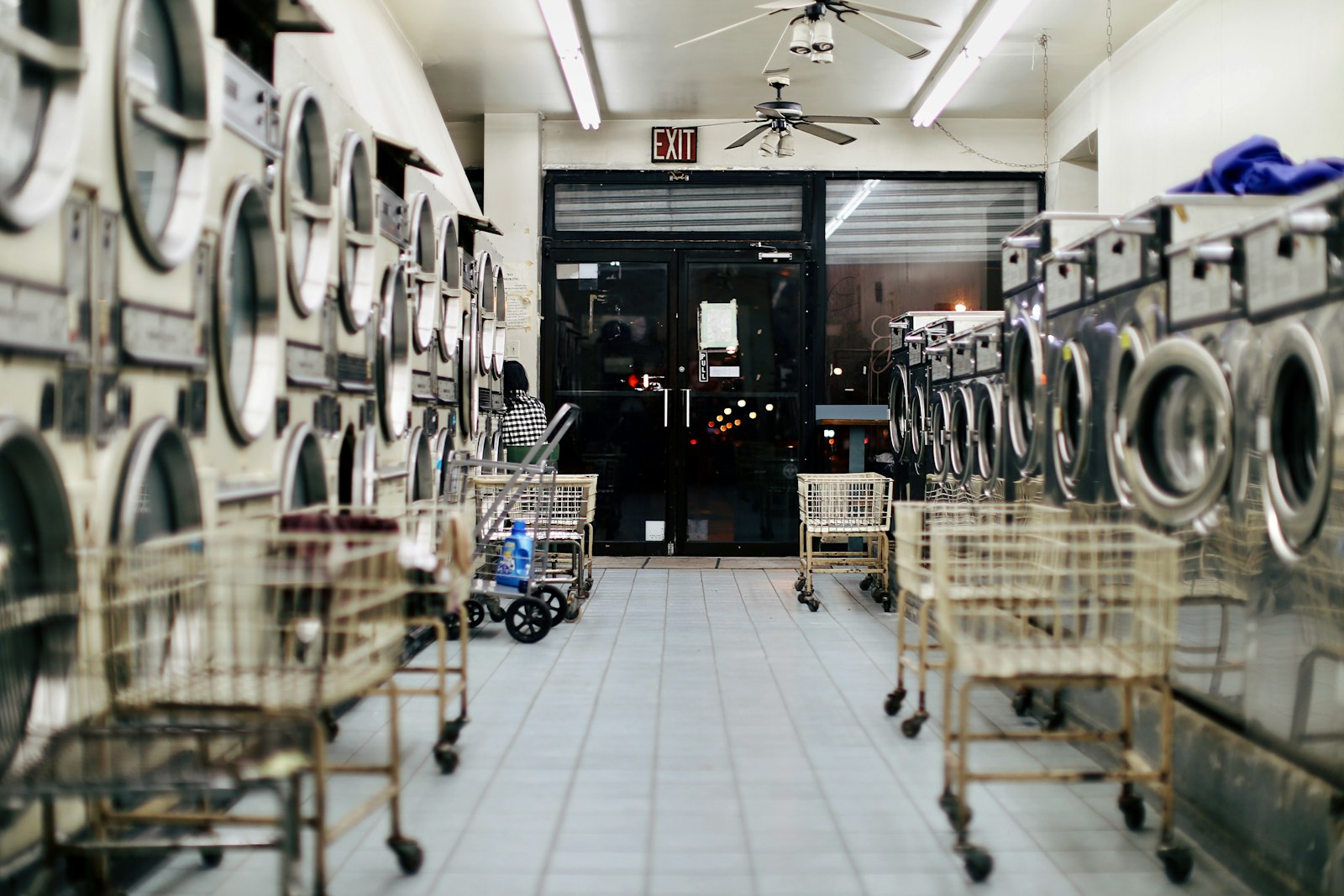
Indian laundry is a paradox — one of the largest service categories in the country, almost entirely unorganised, and still one of the most painful chores in urban middle-class life. Despite UClean, Tumbledry, Pickmylaundry, Doormint and a dozen failed predecessors, less than 8% of the laundry market is run through formal businesses. The rest is split between household washing machines, the building dhobi, and an awkward hybrid of both.
BIDUA's Laundry Project is positioned as the operational layer behind a network of franchise and company-owned laundromats. App-based pickup and delivery, RFID tag tracking per garment, 24-hour turnaround as a default, and subscription billing for households that want the chore line-item off their weekend. We are not trying to be the cheapest — we are trying to be the most reliable.
The unit economics of laundry are deceptively friendly. A single 1,000 sq ft hub with the right machinery can service 1,500 subscriptions and turn cash positive within 14 months. The lever is density per pin-code, not virality. Boring, predictable, repeatable.
The dhobi has been India's most reliable service business for two hundred years and our most invisible one. The opportunity isn't to replace him — it is to put a tracking number on his work and a guarantee behind it.
The opportunity, on its own terms.
Dual-income urban households are time-poor.
Both partners working, plus commute, means weekend laundry has become a real financial decision — not a default chore.
Quick-commerce has trained the consumer.
A generation that expects groceries in 10 minutes is willing to pay for laundry in 24 hours. That expectation didn't exist five years ago.
Franchise model is now proven.
UClean and Tumbledry have validated the unit economics at 500+ outlet scale. The category works — it just hasn't been won by a national brand yet.
Subscription willingness is rising.
OTT, food, fitness, even car wash — Indians are now comfortable with recurring monthly bills for convenience. Laundry is the next obvious subscription line item.
Sized in three rings.
- Per capita laundry spend in metros: ₹400-₹900/month — sticky and recurring.
- B2B laundry for hotels, hospitals, restaurants is ~₹6,500 cr — high-volume, low-acquisition cost.
- Naploo and hospitality contracts can anchor hub utilisation from day one.
- Dry-cleaning premium garment segment grows ~22% annually in Tier-1 and Tier-2.
How it works, end to end.
Hub-and-spoke operations
Central processing hubs (1,000-2,000 sq ft) anchor each catchment of 4-6 km. Spoke pickup points and rider fleets handle the customer interface. One hub per 3-4 pin codes.
Subscription-first pricing
Households pay ₹599-₹2,499/month for fixed garment quotas with daily/alternate-day pickup. Walk-in and one-time customers pay 30-40% premium. Subscriptions deliver predictable hub utilisation.
RFID-tagged garment tracking
Every garment gets a washable RFID tag at pickup. The customer sees in-app status: collected, washed, dried, ironed, dispatched, delivered. No more 'where is my shirt' phone calls.
Franchise + COCO mix
Company-owned outlets in Tier-1 cities for brand control; Franchise (FOFO) in Tier-2 and outer Tier-1. Franchisee invests ₹15-25 L per hub, BIDUA runs ops, tech, marketing, supply chain.
B2B contracts as anchor load
Naploo properties, boutique hotels, restaurants, gyms and salons sign annual linen contracts. This anchors 30-40% of hub capacity at predictable margins, with consumer subs filling the remaining capacity.
Three compounding phases.
Pilot & prove
- Subscription plans (₹599-₹2,499/month)
- Pay-per-load and dry-clean walk-ins
- Naploo and hotel linen contracts
- Premium services (suit, saree, leather, sneaker)
Franchise scale
- Franchise onboarding fees (₹3-6 L)
- Per-hub royalty on monthly revenue (~6-8%)
- Detergent and consumables supply margin
- B2B contracts at scale (hospitals, corporates)
Platform layer
- White-label laundry app for hotels and apartments
- Linen rental subscriptions (towels, bedsheets)
- Garment care insurance & repair services
- Carbon and water-efficiency certification revenue
Patient cadence, deliberate steps.
-
Q1 2027First company-owned hub in Noida — capacity 1,500 garments/day.
-
Q3 2027App live with RFID tracking; 2,000-subscriber milestone.
-
Q1 20285 hubs operational across Delhi-NCR; B2B Naploo contracts begin.
-
Q4 2028Franchise model goes live; first 20 franchise hubs awarded.
-
2029-2030Expand to Mumbai, Bengaluru, Pune, Hyderabad — 80 hubs total.
-
2031120-hub network; profitability across all city clusters.
Who else is here — and why we're different.
- RFID per-garment tracking — competitors track by bag, we track by piece.
- Subscription-first model with B2B anchor load — better hub economics from day one.
- BIDUA brand and Naploo captive demand — lower customer acquisition cost than independent franchisees.
- Water-efficient and bio-detergent commitment — a real differentiator in metros where ESG is starting to matter.
What can go wrong — and how we plan for it.
Damaged or lost garments
Mitigation: Per-garment RFID tracking, machine-vision inspection, ₹3,000-₹10,000 default protection per item, premium tier with full-replacement cover.
Hub utilisation below break-even
Mitigation: B2B linen contracts pre-sold before hub launch; subscription targets per pin code before opening; flexible second-shift activation.
Franchise quality variance
Mitigation: Centralised ops, mystery audits, NPS-linked royalty rebates, and franchise scorecards. Termination clause for chronic underperformers.
Water and effluent regulation
Mitigation: All hubs designed with effluent treatment from day one. Water-recycling tech reduces fresh-water need by ~60%. Stay ahead of municipal compliance.
Price-led competition from informal dhobis
Mitigation: Don't fight on price — fight on reliability, tracking, replacement guarantee, and time savings. Target dual-income households where time > ₹50/garment.
Connected BIDUA divisions.
Every BIDUA bet feeds something else in the group. This one connects to:


Questions partners and investors actually ask.
What is the turnaround time?
Standard subscription: 24 hours pickup-to-delivery. Express: 8 hours at 1.5× the per-load price. Dry-cleaning: 48-72 hours depending on garment type.
How are damages handled?
Every garment is RFID-tracked. Default protection is ₹3,000-₹10,000 per garment, with premium tiers up to full-replacement. Claims are processed in-app within 5 working days.
What does a franchise cost?
Hub franchise: ₹15-25 L total investment including machinery, fit-out, deposit and working capital. Royalty: 6-8% of monthly revenue. Payback target: 22-28 months.
Do you handle dry-cleaning?
Yes. We use perchloroethylene-free, hydrocarbon-based dry-cleaning at flagship hubs. Premium garments (silk, leather, designer) handled by trained operators only.
Is detergent eco-friendly?
Default detergents are biodegradable and phosphate-free. Premium-tier customers can opt for fully plant-based formulations at a small upcharge.
Can I pause my subscription?
Yes. Pause for up to 2 months per year without losing the subscription rate. Useful for travel, monsoon storage, or seasonal wardrobes.
Do you serve hotels and businesses?
Yes — B2B linen and uniform contracts are a core offering. Naploo properties, boutique hotels, gyms, salons and restaurants are priority verticals.
Become a founding hub partner.
We are signing the first 5 franchise partners for our Delhi-NCR rollout in 2028. Real-estate-backed entrepreneurs with ₹15-25 L deployable capital welcome.