Lunchbox with Battery Heating
The Indian tiffin is sacred. We are giving it a battery so the food stays as hot as it left home.

The BIDUA Heated Lunchbox is a battery-powered, self-warming tiffin designed for the Indian working professional. A rechargeable lithium-ion cell, a low-wattage heating plate at the base, food-grade stainless steel compartments and a small temperature display on the lid. Charge it overnight, pack hot food in the morning, eat it at the office at 65 °C six to eight hours later.
India already runs on tiffin culture. The Mumbai dabbawalas deliver 200,000 tiffins a day. Tier-1 office canteens have been losing share to home-cooked meals carried from home. But every one of those meals goes cold by lunch — and the existing solutions (microwave queues, hot bags, vacuum tiffins) are inadequate. A battery is the obvious answer.
If validated, this is a product business — not a service. BIDUA designs the lunchbox, sources cells from India-approved suppliers, manufactures in Noida or Pune, and sells through Amazon, Flipkart, corporate gifting and direct-to-consumer. The market is not niche — it is every Indian who packs lunch.
Every Indian office desk hides a slightly cold lunch and a small daily disappointment. We are not solving hunger — we are solving the loss of a warm meal from home.
The opportunity, on its own terms.

Lithium cell costs have fallen 80% in a decade.
A 7.4V 2200mAh pack — enough to keep a tiffin warm for six hours — now costs under ₹450 at scale. The same product would not have been affordable in 2018.
Office return is permanent but flexible.
Hybrid work means employees are at the desk 3–4 days a week — enough to justify a ₹2,499 device, not so many days that they need a full canteen subscription.
Microwave anxiety is real.
Cross-contamination, queue time, plastic concerns, and many offices simply don't have one. A self-heating tiffin removes the need entirely.
Corporate gifting market is hungry for a useful, brandable product.
Diwali gifting in India crosses ₹10,000 crore — and HR teams are tired of dry fruit boxes. A premium, branded heated tiffin is exactly the SKU they want.
Sized in three rings.
- India has ~60 million salaried urban workers — even 1% adoption is 600,000 units.
- Corporate gifting volumes during Diwali and onboarding rounds typically run 500–5,000 units per company.
- Existing electric lunchboxes on Amazon India (Milton, Cello, Borosil) retail at ₹1,800–3,500 — proven willingness to pay.
- Tiffin services like FreshMenu and Zoff already serve hot food at premium prices, validating that warmth is what consumers will pay for.
How it works, end to end.
Direct-to-consumer first
Launch on Amazon, Flipkart and a BIDUA-branded D2C site. Capture margin, capture customer data, capture reviews. Build the brand before going retail.
Corporate gifting channel
Engineered for the HR and admin buyer. Co-branding, bulk pricing, custom packaging. One company order can be 2,000+ units in a single PO — and it doubles as on-the-desk advertising.
Made-in-India manufacturing
Sub-assembly in BIDUA-aligned vendor units in NCR or Pune. Final assembly, QC and cell pairing in-house. Targeting BIS certification and IS 16046 compliance from day one.
Accessory and refill ecosystem
Replacement inner boxes, extra batteries, branded thermal sleeves, USB-C car chargers. The hardware is the entry — the accessory line is the margin.
Service & warranty
2-year battery warranty, pan-India serviceable through 50+ partner centres. A premium product fails if the support is informal — BIDUA Hosting infrastructure runs the RMA portal.
Three compounding phases.
Prove product-market fit
- D2C sales via Amazon and Flipkart
- Direct corporate gifting pilots (5–10 companies)
- Influencer and review-led marketing
- Pre-order and early-bird waitlist revenue
Channel expansion
- Modern retail (Croma, Reliance Digital, Tata CLiQ)
- Annual contracts with corporate gifting agencies
- Export to UAE and Southeast Asia
- Accessories, refills and replacement parts
Category leadership
- Premium SKUs (steel-on-steel, smart app, larger capacity)
- Subscription model for replacement batteries
- Co-branded editions with cookware brands
- B2B kitchen tools for hospitality (Naploo, hotels)
Patient cadence, deliberate steps.
-
Q1 2027Industrial design and prototype finalised. BIS compliance lab testing begins.
-
Q3 2027Pilot run of 1,000 units. Internal BIDUA distribution to staff for real-world testing.
-
Q1 2028Commercial launch on Amazon and D2C. ₹2 cr marketing campaign.
-
Q4 2028Corporate gifting season — first major Diwali contracts.
-
2029Modern retail rollout. Second SKU (larger family-size variant).
-
2031Export markets, smart-app integration, 120,000-unit annual run rate.
Who else is here — and why we're different.
- True portability — battery, not power-plug. Works in cars, trains, offices without sockets.
- Indian compartments — sized for sabzi, dal, rice and roti, not a single bento well.
- Temperature display on lid — visible reassurance, not a guess.
- Made in India with BIS certification — corporate buyers can procure under Make in India policy.
What can go wrong — and how we plan for it.
Battery safety perception
Mitigation: BIS-certified cells, UL-grade casing, thermal cutoff at 75 °C, public lab safety reports.
Price-sensitive market
Mitigation: Two-SKU strategy — premium ₹2,499 and accessible ₹1,599 variant. EMI on D2C.
Competitor copy after launch
Mitigation: Design patent on form factor, exclusive cell supplier contracts, 12-month head start on retail.
Service network strain
Mitigation: Partner with established appliance service chains pan-India. RMA portal built before launch.
Slow corporate adoption
Mitigation: Pilot kits to top 100 HR heads. Sampling-led B2B sales motion, not cold outreach.
Connected BIDUA divisions.
Every BIDUA bet feeds something else in the group. This one connects to:
 Live
Live
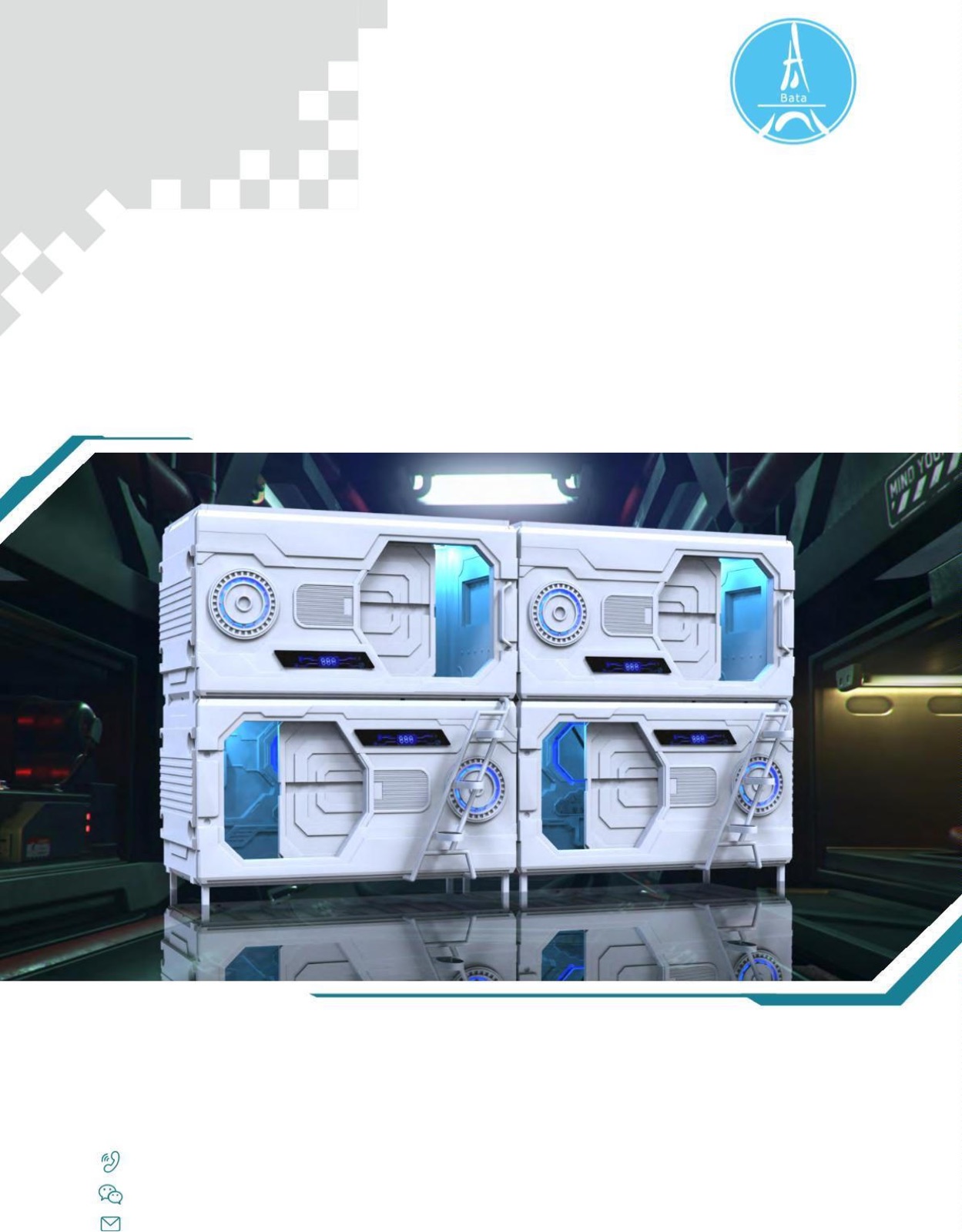
BIDUA Pods
Stainless steel fabrication and electronics integration overlap directly with Pods manufacturing.
biduapods.com Live
Live
BIDUA Hosting
RMA portal, warranty registration and customer support stack run on BIDUA Hosting infrastructure.
biduahosting.com Live
Live
Naploo™ Smart Pod Hotels
B2B in-room dining and crew meals at Naploo properties — first captive customer.
naploo.com
Questions partners and investors actually ask.
How long does the food stay warm?
Target performance is 6–8 hours at 60–65 °C on a single overnight charge. Real-world performance depends on ambient temperature and food density.
Is it safe? What about battery fires?
Cells will be BIS-certified, with thermal cutoff at 75 °C and a non-conductive outer casing. Each unit will ship with a public safety test report.
Can I microwave the inner box?
The inner stainless steel compartments are removable and microwave-safe-compatible — but the whole product is designed so you should never need to.
What is the launch price?
Indicative ₹2,499 for the standard SKU and ₹1,599 for an accessible variant. Subject to component pricing at launch.
How is this different from Milton's electric lunchbox?
Milton's units mostly require a 220V power plug to heat. Ours runs on a built-in battery — true desk and travel portability.
Will it work for Indian families?
Yes — capacity is designed around three compartments (sabzi, dal, rice + roti). A larger family-size SKU is planned for 2029.
How is the warranty handled?
2-year battery warranty, 1-year electronics. Serviceable through 50+ partner centres at launch, with an online RMA portal.
Is it made in India?
Yes. Sub-assembly with Indian vendors in NCR or Pune, final assembly in-house. BIS-certified and eligible for Make-in-India corporate procurement.
Be a launch partner for the Indian heated tiffin.
We are looking for corporate gifting partners, manufacturing co-investors and D2C retail collaborators ahead of our 2028 launch.