Milk Spill Stopper
Every Indian kitchen has seen milk boil over. Nobody has built the device that stops it.

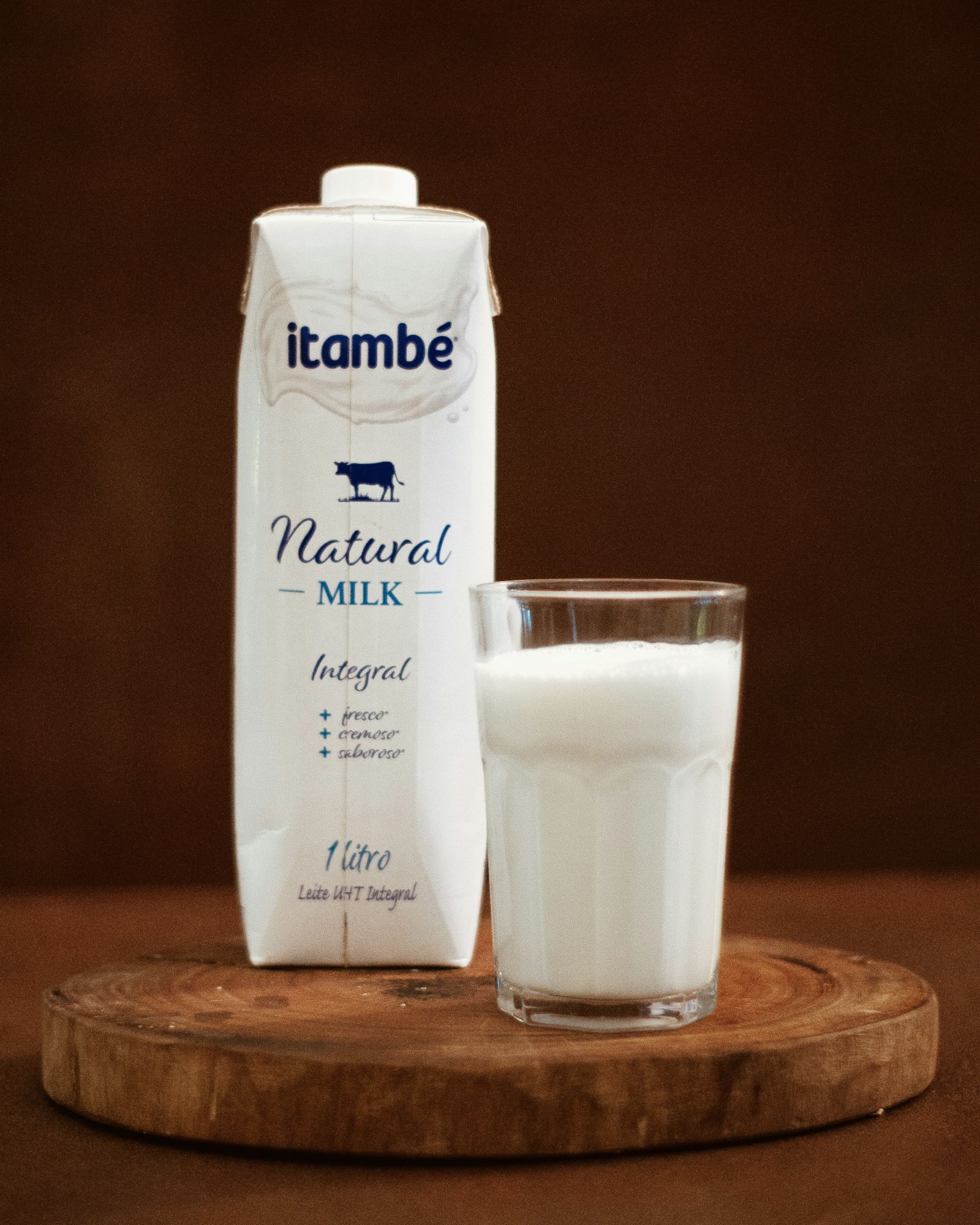
Boiling milk is a daily ritual in over 260 million Indian households. It is also one of the most-watched, most-stressful five minutes in any kitchen — because the moment attention wanders, the milk climbs, spills, kills the gas flame and leaves a burnt mess that takes 15 minutes to clean and an LPG cylinder visibly emptier.
BIDUA Industries is exploring a simple, dignified solution: a smart milk-spill stopper that sits between the gas burner and the vessel, detects rising foam via thermal or capacitive sensing, and either auto-reduces the flame, sounds an alarm, or — in a more ambitious version — actuates a solenoid valve to cut gas momentarily.
If the right form factor lands at the right price point (₹999-1,999), this is potentially a product that ships in millions — a category-creator in Indian kitchenware. Not glamorous. Just useful. And distinctly Indian in the problem it solves.
Indian engineering has built the cheapest car on earth, the fastest payment rail in the world, and a Mars orbiter on a shoestring. But it has not yet built the ₹1,500 gadget that stops your milk from boiling over.
The opportunity, on its own terms.
LPG prices are politically painful.
A 14.2 kg cylinder is now ₹900+ in most cities. Households are visibly cost-conscious about gas wastage in a way they were not a decade ago.
MEMS sensors are finally cheap enough.
Thermopile, IR and capacitive proximity sensors now cost ₹30-100 at volume — making a sub-₹1,500 retail device feasible for the first time.
Indian D2C kitchen brands have a playbook.
Wonderchef, Vinod, Milton, Stovekraft, Inalsa have proven that ₹999-2,999 smart kitchen products can scale on Amazon and Flipkart with the right positioning.
Safety angle resonates.
Stove-related kitchen accidents kill thousands of Indian women every year. Any device that improves stove safety has a strong consumer narrative and potential government tender interest.
Sized in three rings.
- Average urban Indian household: 1 stove burner, 2 milk-boiling events daily.
- LPG wastage per spillover: ~5-10g of LPG + cleanup time + 200ml-500ml of spilt milk.
- Comparable category benchmark: gas leak detectors retail at ₹999-1,999 and sell ~3-5L units/year on Amazon.
- Potential government channel via Ujjwala / Anganwadi schemes once safety case is established.
How it works, end to end.

Product design
Two SKUs. Basic: clip-on sensor disc that sits under the vessel, beeps loudly when milk approaches the rim. Premium: smart unit that pairs with a low-cost solenoid in-line with the LPG hose to auto-cut flame, with mobile alerts.
Manufacturing
Designed in India, contract-manufactured in Noida or Pune. Targeted bill-of-materials under ₹400 for basic, under ₹900 for smart variant. Made-in-India branding is core.
D2C + marketplace
Primary launch on Amazon, Flipkart and our own bidua.in. Influencer-led demos in Hindi and regional languages on Instagram and YouTube — kitchen content has massive organic reach in India.
Modern trade
Year 2 onward: Reliance Smart, DMart, Croma, Vijay Sales. The category is novel — placement near gas stoves and kitchen aids.
Institutional & government
Pitch to LPG distributors for safety bundling. Long-shot but high-volume: Ujjwala scheme or state Anganwadi tenders if a safety case can be built.
Three compounding phases.
Validation
- D2C sales on Amazon and bidua.in
- Influencer-driven Instagram and YouTube sales
- Direct kitchen-show retail in 2 metros
- Pilot batch sales (1,000-5,000 units)
Scale
- Modern trade placement
- Smart variant launch with app pairing
- Bundles with gas stoves (OEM partnerships)
- Replacement-cycle accessories
Platform
- LPG distributor safety bundles
- Government tender — Anganwadi, hostel kitchens
- Export to similar markets (Pakistan, Bangladesh, Sri Lanka diaspora)
- Adjacent products: oil splatter alarm, pressure cooker monitor
Patient cadence, deliberate steps.
-
Q4 2026Concept validation — 200 household survey across Delhi NCR, Mumbai, Bangalore on willingness to pay.
-
Q2 2027Industrial design and electronics prototyping with a Noida ODM partner.
-
Q4 2027100-unit kitchen pilot. Iterate on form factor, sensor reliability and Indian-vessel compatibility.
-
Q2 2028BIS certification and first 5,000-unit production batch. Amazon and bidua.in launch.
-
2029Smart variant with solenoid + app pairing. Modern trade rollout.
-
2030LPG distributor pilot. International export evaluation for South Asia markets.
Who else is here — and why we're different.
- Designed specifically for Indian vessels, Indian milk fat content and Indian LPG stoves — not a generic import.
- Price point engineered for mass market, not premium gadgetry.
- Made-in-India narrative in a kitchen-safety category — strong organic content potential.
- Smart variant lays groundwork for a broader BIDUA Smart Kitchen line.
What can go wrong — and how we plan for it.
Behaviour change — Indian cooks have managed without this for generations
Mitigation: Position around LPG cost saving and safety for elderly / dual-income households, not novelty. Influencer-led 'first day in the kitchen' narratives.
Sensor reliability across milk types (toned, full-fat, buffalo)
Mitigation: Six-month field trial across 100 households with varied milk types before commercial launch.
Knockoff risk from Chinese imports once category validates
Mitigation: Brand-first play, IP filing for the form factor, fast move to smart variant which is harder to clone.
Smart variant complexity — solenoid in LPG line raises safety concerns
Mitigation: BIS and PESO certification. Conservative engineering — fail-safe defaults to gas-off, not gas-on.
Single-product company risk
Mitigation: Roadmap of adjacent kitchen-safety products: oil-spill alert, pressure-cooker safety monitor, induction-stove milk sensor.
Connected BIDUA divisions.
Every BIDUA bet feeds something else in the group. This one connects to:
 Live
Live
BIDUA Pods
Manufacturing and electronics assembly capability for low-cost smart hardware.
biduapods.com Live
Live
PersistIP
IoT firmware and connectivity for the smart variant's app-paired experience.
ip.bidua.in Live
Live
BIDUA Hosting
App backend, OTA firmware updates and device telemetry.
biduahosting.com
Questions partners and investors actually ask.
Will this work on any stove?
Design target is universal compatibility with Indian LPG and PNG stoves. Induction-top compatibility is a separate SKU.
Is it safe to put electronics near a flame?
The sensor sits on the vessel rim or under it on the trivet — not inside the flame. Materials chosen are food-safe and rated for the local temperature.
What if I cook other things?
Initial version is milk-specific. Adjacent SKUs for daal and curry boil-over alerts are on the roadmap.
How does the smart variant cut the gas?
A BIS-certified solenoid valve installed inline with the LPG hose, fail-safe to closed. Triggers on the sensor signal. Requires one-time installation by a BIDUA-approved technician.
Price point?
Target ₹999-1,499 for the basic alarm variant. ₹1,999-2,499 for the smart variant with valve and app.
Battery or plug-in?
Replaceable coin-cell for the basic variant, 2-year battery life. USB-C rechargeable for the smart variant.
When can I buy one?
Pilot batch targeted Q2 2028 on Amazon and bidua.in, subject to certification.
Help us prove this small problem is worth solving.
We are recruiting 200 Indian households for the 2027 validation study. Tell us how you boil milk — and what you would actually pay to stop watching it.