NGO for Organ Donation
India has 5 lakh patients waiting. Last year, only 18,378 organs were transplanted.
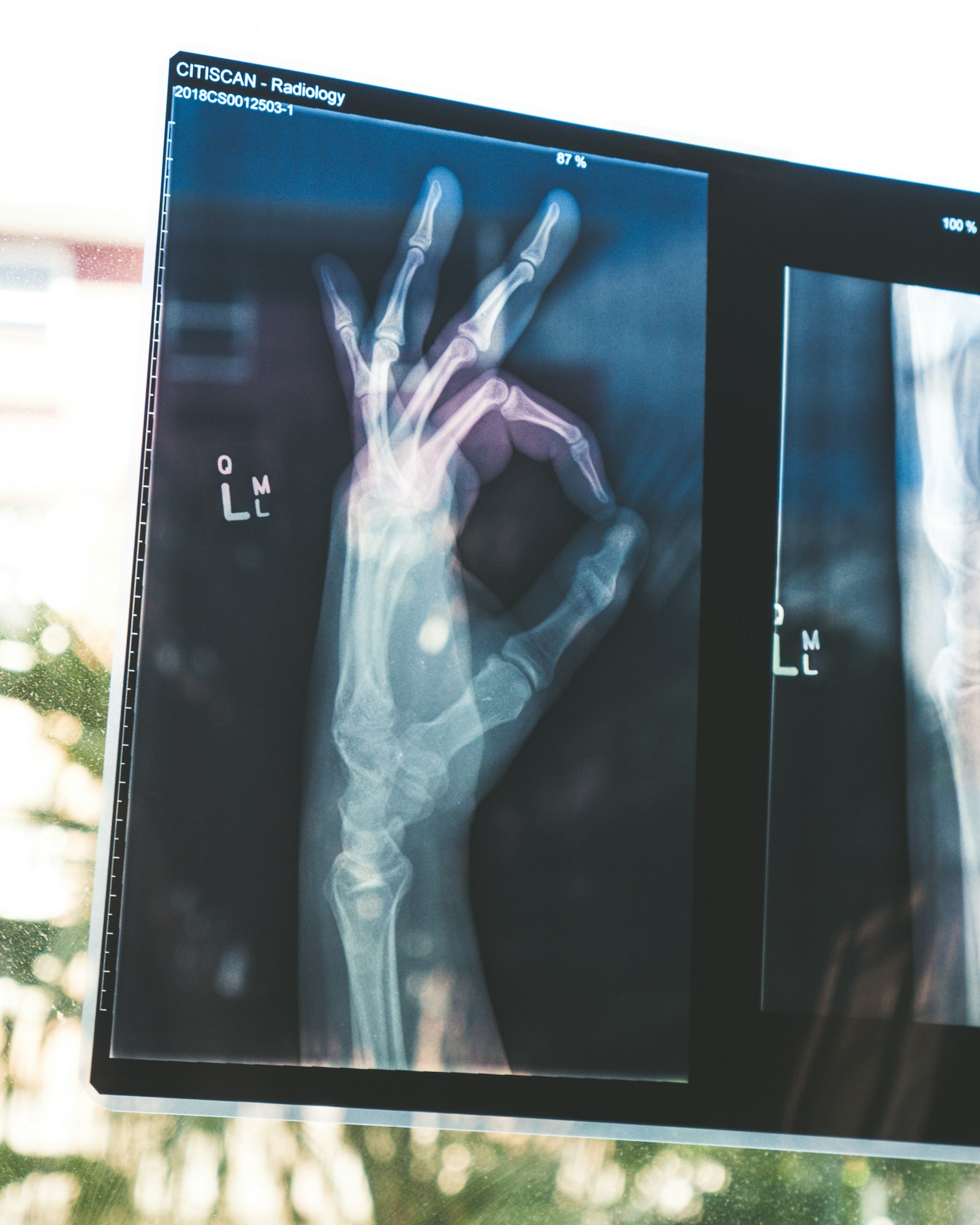
India has one of the lowest deceased organ donation rates in the world — 0.65 per million population, against 49 in Spain and 38 in the United States. Roughly 5 lakh Indians are on waiting lists for kidneys, livers, hearts, lungs, corneas; almost half will die before a match arrives. The barrier is not medical capacity — it is awareness, consent infrastructure and family conversation.
BIDUA Industries is evaluating the creation of a non-profit arm dedicated entirely to organ donation awareness, donor registration drives, hospital and ICU coordination support, and a credible digital pledge platform. Not a hospital. Not a transplant centre. Purely the consent and awareness layer.
Status: idea-stage. Operating model will register as a Section 8 (not-for-profit) company under the Companies Act, with grant + CSR funding. Numbers below are reach/impact targets, not commercial projections.
Every Indian who dies without donating takes seven possible lives with them. The technology to fix this is not medicine — it is consent, and we have built nothing serious to ask for it.
The opportunity, on its own terms.
NOTTO infrastructure is now functional.
The National Organ & Tissue Transplant Organization runs a credible national registry — what's missing is mass awareness and dignified family conversation, not the technology.
CSR funding is hungry for high-impact causes.
Indian corporates committed ~₹27,000 cr in CSR in FY24. Organ donation hits health + community + measurable lives saved — a triple match for ESG reporting.
Digital pledge culture is mature.
UPI, ABHA, Aadhaar — Indians now sign digital intent in seconds. A national 'I pledge' platform is technically trivial; what it lacks is brand and trust.
Family conversation is the actual bottleneck.
Even when an individual has pledged, the family veto rate at the ICU bedside is over 60% in India. The intervention must reach families, not just donors.
Sized in three rings.
- 1 deceased donor can save up to 8 lives and improve 75+ through tissue donation.
- Spain's success — opt-out + intensive ICU coordinator network — is replicable, not magical.
- India's transplant capacity (hospitals + surgeons) currently sits idle for ~60% of capability.
- Tamil Nadu's state programme proves Indian systems can hit 1.8 donors/million when funded.
How it works, end to end.

Section 8 non-profit structure
Registered as a Section 8 company (Companies Act) for governance transparency, eligible for FCRA, 80G donations and CSR funding. No private profit distribution. Independent board including a transplant surgeon, ethicist, NOTTO alumna and family-counsellor representative.
Digital pledge platform
A simple, mobile-first pledge portal — Aadhaar-verified, ABHA-linked, downloadable donor card, family-notification flow. NOTTO-integrated so a pledge appears in the official national registry.
Hospital partnership network
Train and fund transplant coordinators in tier-1 and tier-2 hospital ICUs — these are the people who hold the bedside conversation with grieving families. Lack of trained coordinators is the single biggest operational gap globally.
Awareness campaigns
Annual on-the-ground campaign during Organ Donation Day (13 August). Year-round content — survivor stories, family testimonials, regional-language video. Targeted partnerships with religious & community leaders who lend cultural permission.
Funding model
Corporate CSR commitments, individual donations (80G eligible), grants from foundations (Tata Trusts, Azim Premji Foundation, international health philanthropies), state government partnerships.
Three compounding phases.
Setup
- Founding CSR commitments
- Individual donations (80G)
- Foundation grants
- BIDUA Industries seed funding
Scale
- Multi-year corporate CSR contracts
- State government partnership grants
- International health-philanthropy grants
- Hospital network co-funded coordinator programme
Institutional
- Public-private partnership with NOTTO / state SOTTOs
- Endowment-funded operating budget
- Donor-pledged corpus model
- International donor diaspora giving programme
Patient cadence, deliberate steps.

-
Q1 2027Section 8 incorporation. Board and advisory council finalised. Founding CSR partners signed.
-
Q3 2027Pledge platform v1 launched. Aadhaar + ABHA integration live. Soft launch in NCR with target of 1 lakh pledges.
-
2028Hospital coordinator programme begins — 25 ICUs across 5 cities trained and funded. Annual Organ Donation Day national campaign.
-
2029Expand to 50 hospitals and 8 states. State government MoUs with Maharashtra, Tamil Nadu, Karnataka.
-
2030–2031Reach 10 lakh pledged donors. International diaspora giving programme launches.
-
2032Target — 25 lakh pledged donors, 100 partner hospitals, measurable lift in deceased donation rate in BIDUA-active states.
Who else is here — and why we're different.
- Pure-play focus — organ donation awareness only, not a broad health charity.
- Tech-first pledge platform with NOTTO integration — verifiable national registry sync.
- Investing in the ICU coordinator role — the under-funded but highest-leverage intervention.
- BIDUA backbone — corporate identity adds credibility, cross-promotion across 6+ live brands.
What can go wrong — and how we plan for it.
Public trust / mistrust around organ donation
Mitigation: Total operational transparency, third-party audited annual reports, religious & community advisory council, survivor and family voices at the front.
Family veto rate stays high
Mitigation: Coordinator training programme — the only proven lever in Spain, Croatia, Portugal. Train, fund, certify ICU coordinators at every partner hospital.
Funding volatility
Mitigation: Diversified sources — CSR, individuals, foundations, government — and a multi-year endowment build from year 2.
Bureaucratic friction with NOTTO / SOTTOs
Mitigation: Position as multiplier, not competitor. Co-branded campaigns, formal MoUs. Stay strictly within Transplantation of Human Organs Act framework.
Misinformation / illegal-trafficking scare stories
Mitigation: Active rumour-rebuttal communications, hospital partnership only with NABH-accredited centres, transparent chain-of-custody documentation in every awareness asset.
Connected BIDUA divisions.
Every BIDUA bet feeds something else in the group. This one connects to:
 Live
Live
BIDUA Hosting
Cloud backbone for the pledge platform and NOTTO integration.
biduahosting.com Live
Live
FinWault
Transparent donation flows, 80G receipting, multi-year CSR contract administration.
finwault.com Live
Live
PersistIP
Engineering and security expertise to harden sensitive donor-data infrastructure.
ip.bidua.in
Questions partners and investors actually ask.
How is this different from MOHAN Foundation?
MOHAN does excellent work; we want to complement, not compete. Our differentiated focus is on the digital pledge platform, ICU coordinator training at scale, and BIDUA's corporate-network amplification. Active collaboration is on the table.
Is this a profit-making business?
No. The entity is a Section 8 non-profit. Surplus is reinvested in programmes. BIDUA Industries provides seed funding and brand support — no equity, no returns.
How do you actually increase donation rates?
Three levers — (1) more pledged donors, (2) trained ICU coordinators to hold the family conversation, (3) cultural permission via religious and community leaders. All three are funded together.
Is organ donation allowed in all religions in India?
Yes. Hinduism, Islam, Christianity, Sikhism, Jainism and Buddhism all formally permit organ donation. The taboo is cultural, not theological — and that is exactly what awareness work addresses.
Will my pledge actually mean anything?
A pledge is recorded in the official NOTTO registry and printed on your donor card. At the end-of-life moment, your family is informed of your registered wish — which dramatically reduces refusal rates.
What about black-market or illegal trafficking concerns?
Indian law (Transplantation of Human Organs Act, 1994 with 2011 amendments) is strict. We only partner with NABH-accredited hospitals operating under NOTTO/SOTTO supervision. Full chain-of-custody documentation in every donation.
Where does BIDUA fit?
BIDUA Hosting provides the pledge-platform infrastructure; FinWault handles transparent donation flows and 80G receipting; PersistIP and Naploo employee networks become the first wave of pledge ambassadors.
Can my company partner via CSR?
Yes — multi-year CSR partnerships are exactly the funding model we are designed for. Reach out for our partnership memorandum.
Pledge first. Tell your family second. Save up to eight lives.
We are inviting founding partners — corporates, hospitals, individuals — to launch the BIDUA Organ Donation Trust in 2027. Capital, expertise and time all welcome.