Powerbank with 4G & Wireless Charging
The one device that survives a 14-hour layover, a power cut, and a Mumbai monsoon.
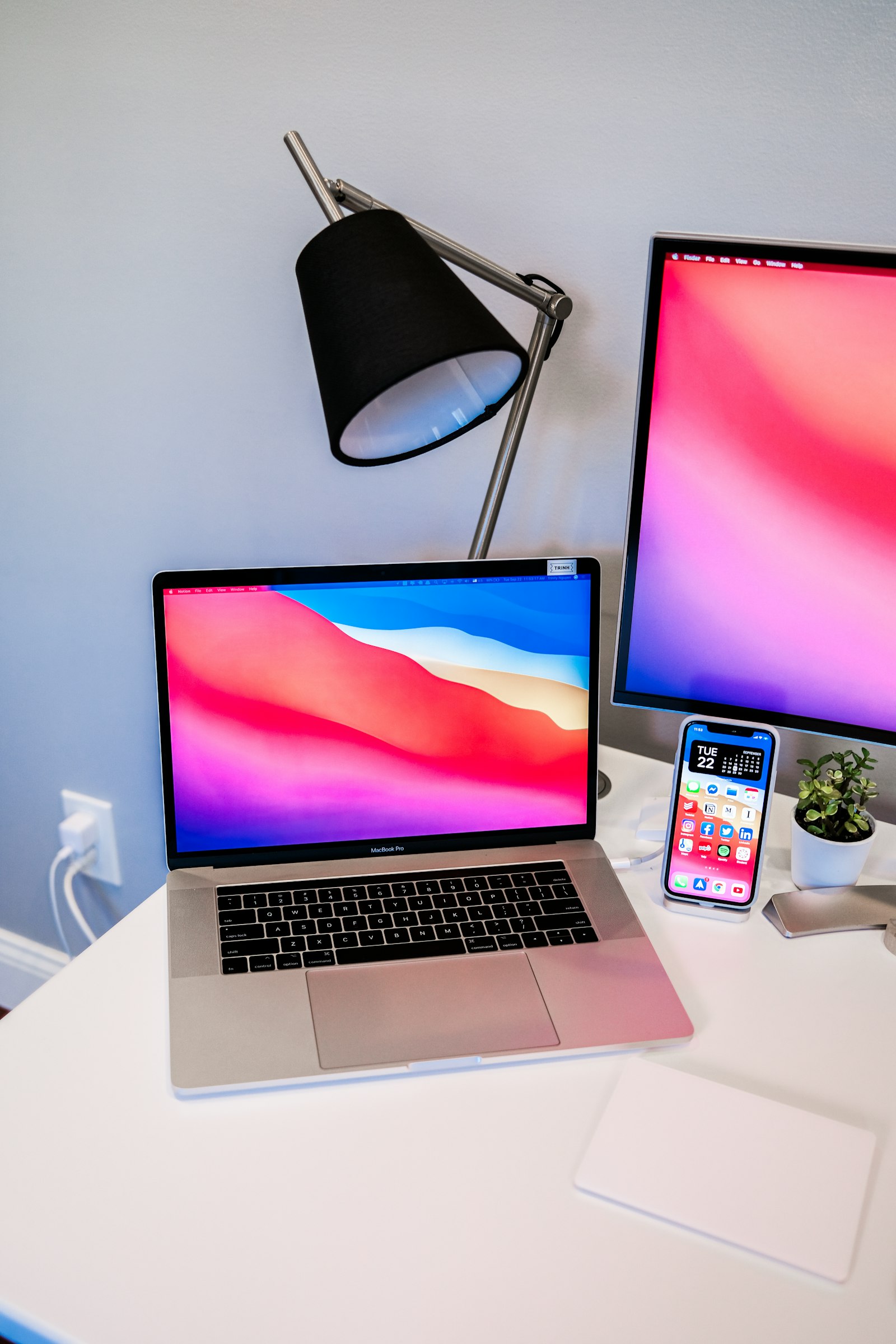
The Indian traveller's bag in 2026 contains three or four overlapping devices: a 20,000 mAh powerbank, a 4G/5G mobile hotspot puck, a wireless charging stand, a torch and a multi-USB charging brick. They cost ₹8,000–₹12,000 together, weigh half a kilo, and tangle inside the bag.
The BIDUA Travel Powerbank Pro collapses all of them into one device — a 20,000 mAh dual-output powerbank with a Jio/Airtel-compatible 4G hotspot (10-device WiFi), a 15W Qi wireless charging top-plate, USB-C 30W PD output, a USB-A QC 3.0 port, an emergency LED torch with SOS strobe, and a small OLED display showing battery / hotspot data usage / connected devices.
If validated, this is BIDUA's flagship consumer-electronics SKU — a high-margin travel-and-business-traveller product that piggybacks on existing wireless and powerbank component supply chains in India.
Travellers don't need a powerbank, a hotspot, and a wireless pad — they need not to forget any of them. Convergence wins the bag, every time.
The opportunity, on its own terms.
4G is now Indian commodity infrastructure.
Jio, Airtel and Vi blanket 96% of the populated landmass. A hotspot built into a powerbank finally has a network worth attaching to.
Wireless charging is mainstream.
Every flagship and most mid-range phones (₹25k+) now support Qi. Five years ago a Qi pad was a luxury — today it is a default expectation.
Travel is back, harder than ever.
Domestic air passenger traffic crossed 16 crore in 2024 (DGCA). Business and tourist travel is now a permanent ₹2L cr+ category — a category that absolutely needs a travel powerbank.
Powerbank category is commodified — convergence is the new differentiator.
Mi, Realme, Ambrane, URBN all sell 20,000 mAh at ₹1,500–₹2,000. Single-feature differentiation is dead; multi-function convergence is the only remaining playbook.
Sized in three rings.
- Mi, Realme, Ambrane, URBN dominate basic powerbanks — premium / multi-function segment is fragmented.
- Indian portable-hotspot market (JioFi, Airtel XStream) alone is ~₹400 cr / yr.
- Domestic business travel rebounded to pre-COVID levels and grew 18% YoY in 2024 (FAITH).
- Multi-function travel kit (powerbank + hotspot + Qi pad) bought separately costs ₹8k–₹12k — a converged SKU at ₹4,999 captures the bundle.
How it works, end to end.
D2C-first launch
Sold initially on biduapods.com and biduahosting.com (cross-promo) — establishes margin and direct customer relationship before retail.
Marketplace expansion
Amazon Choice, Flipkart Plus, Croma listings in Year 1; targeted to business-traveller audience via personalised ad placement.
Carrier-bundle exploration
Talks with Jio and Airtel about co-branded SKUs where the device ships with a pre-activated SIM and a discounted data pack.
Corporate-gifting channel
BFSI, IT and consulting firms gift travel kits to senior employees. Direct-sale corporate-gifting team — high-margin, low-acquisition cost.
BIDUA Hosting tie-in
BIDUA Hosting customers get an exclusive bundle — the powerbank becomes a hardware extension of the cloud/network identity.
Three compounding phases.
Launch
- D2C sales on biduapods.com / biduahosting.com (₹4,999)
- Amazon and Flipkart listings
- Corporate-gifting pilot contracts
- Carrier-bundle pilot with one telecom
Scale & retail
- Croma, Reliance Digital, Vijay Sales placement
- Airport-retail kiosks (Mumbai, Delhi, Bengaluru, Hyderabad)
- Carrier co-branded SKU
- Annual data-plan revenue share
Family & export
- Compact 10,000 mAh variant at ₹2,999
- Pro 30,000 mAh with 5G modem
- SAARC + Middle East exports
- Replacement battery service
Patient cadence, deliberate steps.
-
Q2 2027Industrial design freeze. PCB and modem integration validated with Indian EMS partner.
-
Q4 2027BIS, WPC and TEC certification process (4G modem requires TEC). Pilot batch of 500 units.
-
Q2 2028D2C launch on biduapods.com and biduahosting.com. Soft launch — 5,000 units.
-
Q4 2028Amazon, Flipkart, Croma launch. Carrier-bundle pilot with one major telco.
-
2029Airport-retail kiosk presence in 4 metros. Corporate-gifting channel scaled.
-
2030Compact and Pro variants launched; SAARC export pilots begin.
Who else is here — and why we're different.
- True 4-in-1 convergence in a single Indian-priced SKU.
- Indian carrier compatibility tested across Jio, Airtel, Vi and BSNL.
- TEC-approved 4G modem — most imported alternatives are not legally usable in India.
- OLED display with data-usage and hotspot-device count — useful, not gimmicky.
What can go wrong — and how we plan for it.
TEC certification timeline
Mitigation: Start TEC process in parallel with engineering; engage a Delhi-based regulatory consultant; budget 6-month buffer.
4G modem component sourcing
Mitigation: Dual-source modems (Quectel + Fibocom); pre-order 6-month buffer stock; modular daughter-board so a different modem can be swapped without redesign.
Battery safety / airline transport
Mitigation: BIS IS 16046 certification and UN 38.3 transport-test compliance — 20,000 mAh at 3.7V keeps Wh under airline 100 Wh limit.
Heat management with simultaneous hotspot + Qi
Mitigation: Hardware thermal-limit logic — heavy concurrent use throttles output rather than fails; documented user-warning UI.
Price-band cannibalisation by basic powerbanks
Mitigation: Position by destination (airport-traveller, business-traveller) not by category; corporate-gifting and bundled retail bypass price-shoppers.
Connected BIDUA divisions.
Every BIDUA bet feeds something else in the group. This one connects to:
 Live
Live
BIDUA Hosting
BIDUA Hosting customers receive a bundled SKU; the device extends BIDUA's network/identity footprint into the customer's pocket.
biduahosting.com Live
Live
PersistIP
Hotspot firmware and Wi-Fi-stack security primitives draw on PersistIP networking expertise.
ip.bidua.in Live
Live
Naploo™ Smart Pod Hotels
Naploo travel and business-stay properties offer the powerbank as a check-in welcome amenity / sale item.
naploo.com
Questions partners and investors actually ask.
Which Indian carriers does the 4G hotspot work with?
All four — Jio, Airtel, Vi and BSNL. Dual nano-SIM slot. TEC-approved modem.
How long does the battery last?
~3 full smartphone charges at 20,000 mAh. Hotspot-only mode runs ~10–12 hours of continuous use.
Is it allowed in cabin baggage on a flight?
Yes — 20,000 mAh at 3.7V is ~74 Wh, comfortably under the 100 Wh airline cabin-baggage limit.
Can I charge it via USB-C?
Yes — full USB-C PD input at 30W. ~3.5 hour full charge from empty.
What phones support the wireless charging?
Any Qi-compatible phone — iPhone 8+, Samsung Galaxy S6+, most Android flagships and mid-range from 2023 onwards.
Is there an emergency torch?
Yes — a side-mounted LED with constant and SOS strobe modes. Can run ~40 hours on the battery.
What's the warranty?
18 months on the unit; 12 months on the battery cells. Replacement-only policy.
Will there be a 5G version?
A 5G Pro variant is on the roadmap for Year 3 once Indian sub-6 5G coverage saturates and modem prices drop.
One device, four jobs, one bag.
Travel powerbank pilot opens in 2028. Reserve a unit and lock in introductory ₹3,999 founder pricing.