Road Beggar Donation Platform
Don't give the rupee — give a meal. Don't give to a stranger — give to a verified person whose story you can see.

Every Indian city has the same uncomfortable scene: a traffic signal, a child or an elderly person tapping on car windows, and a passenger frozen between guilt, suspicion and helplessness. Most people roll up the window. A few hand over ₹10 in cash without knowing whether they have just fed a hungry stomach or fed a much darker pipeline behind that stomach.
BIDUA's Road Beggar Donation Platform — to be developed with state-government, municipal and NGO partners — is a structured alternative. Individuals living on the street are identified, verified, given a basic identity tag and linked to a QR-coded badge or card. Donors scan the QR with any UPI app. Funds do not go as cash to the individual — they convert directly into closed-loop credit redeemable at partnered eateries, ration shops, shelters, healthcare clinics, addiction-recovery centres and skilling programmes.
Over time, every QR profile builds a story: meals taken, shelter nights used, doctor visits, training enrolled in. The donor sees real impact; the receiver gets dignified, non-cash support; the city gets data; civil society gets a route out for those who want one. The status is intentionally 'planning' — this is sensitive work that must be built with government and NGOs, not around them.
The moral problem with giving cash to a person at a traffic signal isn't that the cash is too small. It's that you have no idea who is behind them and what the money buys an hour later. Technology can change that.
The opportunity, on its own terms.
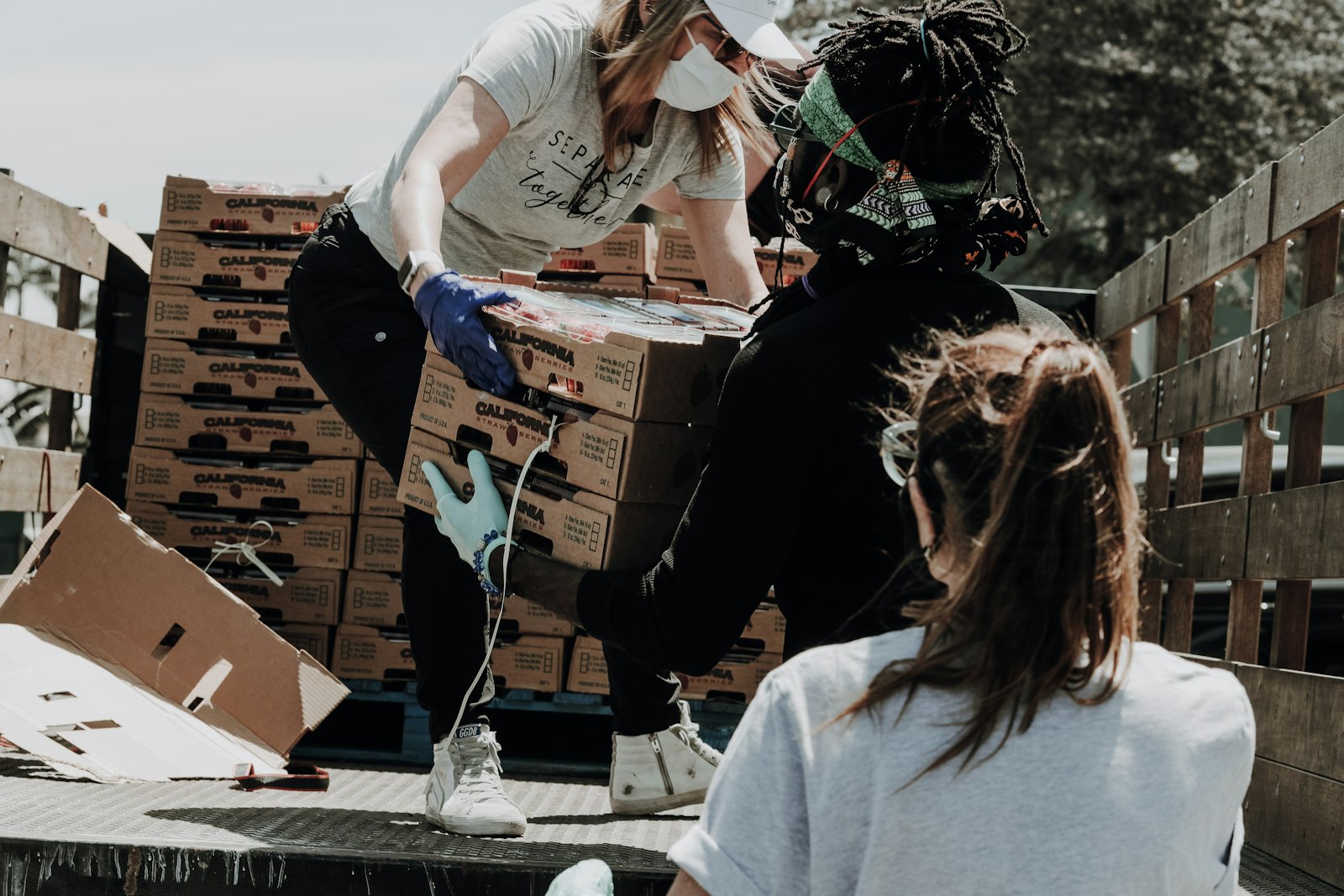
UPI has rewired Indian small-value payments.
Scanning a QR for ₹10 is now muscle memory across all income groups. The donation rail already exists in every pocket.
Urban homelessness has political and policy attention.
The Supreme Court has repeatedly directed states to operationalise shelter homes and a national rehabilitation framework — but execution remains fragmented. A digital layer can sit on top of that framework.
Donor anxiety about misuse is at an all-time high.
Awareness of organised begging rings, child trafficking and substance-abuse risks has shifted public sentiment from 'give cash freely' to 'give if I know it's safe' — a behaviour change a verified platform can ride.
Closed-loop digital wallets are a solved problem.
Issuing non-cashable credit usable only at partnered food, ration, shelter and healthcare points is technically straightforward today — and finally allows donations to be safe by construction.
Sized in three rings.
- ~17 lakh estimated urban homeless per Census 2011 — likely materially higher today.
- Government's SUPPORT scheme and Shelter for Urban Homeless programme provide partnership scaffolding.
- Existing NGOs (Don Bosco, Aashray Adhikar Abhiyan, others) bring on-ground identification expertise.
- Corporate India is increasingly receptive to urban-homelessness CSR with a digital backbone.
How it works, end to end.
Verified identity, not anonymous QR
Each individual is enrolled only with NGO and municipal partners. Verification includes biometrics, a basic medical and social assessment, and consent. No anonymous QR ever goes live. Children are never enrolled; minors are routed to child-protection systems.
Closed-loop donation credit
Donations via UPI / QR scan do not become cash. They become credits in a closed wallet usable only at partnered dhabas, ration shops, night shelters, doctors, addiction-recovery centres and skilling programmes — never at liquor shops, paan shops or for cash withdrawal.
Partner merchant network
Each city has a pre-vetted network of food, ration, shelter and healthcare partners. They invoice the platform for credits redeemed; the platform settles in INR. Service quality is monitored through user feedback and surprise audits.
Pathway, not a parking lot
Each profile is connected to a caseworker through partner NGOs. The platform tracks engagement with skilling, ID-issuance, mental-health support and shelter — so support is a pathway out, not a perpetual handout.
Sustained by CSR, not by margin
The platform is run as a thin-margin / cost-recovery operation. Sustained by CSR sponsorship, government partnership grants, and a small transaction fee absorbed by donors as an optional 'platform support' tip — never by deducting from the beneficiary's credit.
Three compounding phases.
Pilot in 2 cities
- Founding CSR sponsorships
- State / municipal pilot grants
- Optional donor platform-support tips
- Foundation and philanthropic grants
Scale to 10 cities
- Multi-city CSR contracts
- Government PPP for urban homelessness
- Skilling outcome payments (linked to Idea 115)
- Healthcare partner-network admin fees
Platform & policy
- National roll-out PPP
- Outcome-linked impact bonds
- Anonymised urban-homelessness data products
- Cross-platform integration with welfare schemes
Patient cadence, deliberate steps.
-
Q3 2027Policy and ethics framework finalised with two state governments and three lead NGOs. Independent ethics board constituted.
-
Q1 2028Pilot enrolment opens in two zones each of Delhi and Bengaluru. First 2,000 verified individuals onboarded over 12 months.
-
2029Closed-loop wallet live. First measurable outcomes published — meals served, shelter nights, skilling enrolments.
-
2030Expansion to Mumbai, Kolkata and Hyderabad. 25,000 individuals enrolled.
-
2031Outcome-linked impact bond pilot. Skilling lane fully integrated with BIDUA's unemployment platform (Idea 115).
-
203225-city footprint targeted. 5 lakh enrolled individuals — with measurable transition rates out of street life.
Who else is here — and why we're different.
- Money becomes meals, shelter and healthcare — never cash, never alcohol, never trafficking-linked.
- Every donation is traceable to a verified individual and a real outcome.
- Built with NGOs and government from day one — not as a disruptive startup, but as enabling infrastructure.
- Designed as a pathway out of street life, not a more efficient way to stay on it.
What can go wrong — and how we plan for it.
Ethical concern about 'tagging' people
Mitigation: Voluntary, consent-based enrolment with clear opt-out. Independent ethics board reviews all design decisions. No children enrolled. No public-facing personal data.
Exploitation by organised begging rings
Mitigation: Verification requires NGO and municipal partner sign-off. Closed-loop credit cannot be cashed out, eliminating most extractive incentive. Suspicious enrolment patterns flagged and investigated.
Insufficient merchant density in pilot zones
Mitigation: Pre-signed merchant partners (eateries, ration shops, clinics, shelters) before any QR goes live. Minimum density threshold mandatory before zone activation.
Donor scepticism about new model
Mitigation: Transparent dashboards, third-party audited outcome reporting, media partnerships and clear donor receipts showing exactly what their money did.
Regulatory and political sensitivity
Mitigation: Built as a government-and-NGO-led platform with BIDUA as a technology and operations partner. No unilateral roll-out. State-by-state legal review before activation.
Connected BIDUA divisions.
Every BIDUA bet feeds something else in the group. This one connects to:
 Live
Live
FinWault
Powers the closed-loop wallet, KYC, donor receipts and merchant settlement — the financial spine of the platform.
finwault.com Live
Live
PersistIP
Identity, biometric verification and secure document storage for enrolled individuals and NGO caseworkers.
ip.bidua.in Live
Live
BIDUA Hosting
Hosts the donor app, merchant network and outcome-reporting dashboards securely within India.
biduahosting.com
Questions partners and investors actually ask.
Why not just give cash directly?
Because cash at a signal can fund anything — including organised exploitation and substance abuse. Closed-loop credit ensures the rupee becomes food, shelter or medicine for the person it was meant for.
Won't children get enrolled?
No — and that is non-negotiable. Children encountered through outreach are routed exclusively to child-protection and child-welfare systems, not into the donation platform.
Who verifies the individuals?
NGO partners with established street-outreach experience, with municipal authority sign-off. BIDUA provides the technology; verification is led by NGOs and government.
How does the donor pay?
Scan the QR with any UPI app — exactly like paying a kirana shop. The amount is credited to the beneficiary's closed wallet, not their bank account or hand.
Where can the credit be spent?
Only at platform-partnered dhabas, ration shops, night shelters, clinics and skilling centres. Never at liquor shops, paan shops or for cash withdrawal.
What does the donor see in return?
A receipt, a category-level breakdown (meals, shelter nights, doctor visits) of where their money went, and aggregate outcome reports about that individual's progress over time.
Is this a charity?
It is a thin-margin / cost-recovery social-impact operation. Funded by CSR, foundations, government partnerships and optional donor tips — never by reducing what reaches the beneficiary.
What if a beggar doesn't want to be enrolled?
They are not enrolled. The platform is fully consent-based. Outreach NGOs continue to support them through traditional channels regardless.
Help us design this responsibly.
This is sensitive work. Before we go live, we are convening NGOs, municipal officers, ethicists and pilot CSR sponsors. If you belong to any of those communities, we want to hear from you.