Tyre Manufacturing
India makes more two-wheelers than any country on earth. We import too many of the tyres they run on.
India's tyre industry is a ₹85,000 crore behemoth dominated by five players — MRF, Apollo, JK, CEAT and Bridgestone-India — with a long tail of smaller manufacturers competing on price in the replacement market. Two-wheelers and small passenger cars consume roughly 60 per cent of unit volume but a much smaller share of revenue, leaving a structural opportunity in the value segment.
BIDUA Industries is evaluating a focused tyre manufacturing play — a single greenfield plant in the rubber-rich southern belt (Kerala or Tamil Nadu) targeting two-wheeler tyres (75-100cc commuter motorcycles, scooters, electric scooters) and small-car tyres (13-14 inch budget passenger segment), with a clear value-for-money brand promise to the replacement market.
If validated, this is a capital-heavy but durable play in an industry with proven Indian demand, abundant raw material, and a competitive structure that has not been disrupted in two decades. The challenge is not market existence — it is capital efficiency, distribution, and trust-building against MRF's 70-year head start.
A tyre is sixty per cent rubber, thirty per cent engineering and ten per cent brand trust. India has the rubber. India has the engineers. The brand-trust gap below MRF and Apollo is wide enough to drive a value-segment factory through.
The opportunity, on its own terms.
Electric two-wheelers are rewriting tyre demand.
Ola, Ather, TVS iQube and Bajaj Chetak are selling 2L+ units a month with very different tyre requirements — low rolling resistance, regenerative braking compatibility. Incumbents are slow to adapt.
Natural rubber prices are cyclical-low again.
Indian natural rubber at ₹160-180/kg in 2026 — among the lowest in five years. A plant commissioned now locks in raw material economics for a decade.
Make-in-India tyre incentives.
PLI scheme for auto-components, state incentives in Tamil Nadu and Kerala for rubber-products manufacturing, anti-dumping duties on Chinese imports — the policy stack favours new domestic capacity.
Replacement market is structurally underserved.
70% of Indian tyre demand is replacement (not OEM). The price-conscious replacement buyer in tier-2 and tier-3 India is the segment incumbents under-serve.
Sized in three rings.
- Two-wheeler tyre: ₹600-2,500 retail per tyre depending on size.
- Small-car tyre (13-14 inch): ₹2,800-4,500 per tyre.
- An average two-wheeler in India consumes 1 set of tyres every 18-24 months.
- Electric two-wheeler tyres carry a 15-20% premium over conventional — and a thinner supplier base today.
How it works, end to end.
Greenfield plant
Single-location plant — likely in Kottayam (Kerala) or Vellore (Tamil Nadu) belt for raw material proximity. Initial capex estimate ₹350-450 cr for ~4M tyre/year capacity, focused on two-wheeler and small-car SKUs.
Value-segment brand positioning
Not competing head-on with MRF. Positioned as the trusted value brand — 'genuine quality, honest price' — targeting the replacement buyer who today picks between premium and unbranded imports.
Distribution-first
Tyre business is won at the retailer counter. Heavy investment in mechanic training, retailer margins, point-of-sale signage and warranty handling. Initial focus on 4 states before national rollout.
EV-tyre line as differentiator
Dedicated SKUs for electric two-wheelers — low rolling resistance, silent compounds, higher load index for battery weight. OEM tie-ups with emerging EV players who lack the negotiating leverage to get MRF priority.
Export optionality
Year 3 onward, evaluate exports to Africa, Bangladesh, Nepal and South-East Asia — markets where Indian tyres command a quality reputation at the right price point.
Three compounding phases.
Plant commissioning & ramp
- Two-wheeler replacement tyres (primary)
- Small-car replacement tyres
- Early OEM contracts with EV two-wheeler brands
- Government and fleet tenders
Brand & distribution
- National retailer network (5,000+ outlets)
- OEM supply expansion
- EV-specific premium line
- Tube and flap accessory revenue
Scale & adjacencies
- Exports to South Asia and Africa
- Retreading and tyre-as-a-service for fleets
- Three-wheeler and light commercial vehicle SKUs
- Capacity expansion / second plant
Patient cadence, deliberate steps.
-
2027Feasibility, land identification and partner discussions. Engineering team assembled. Capital plan finalised.
-
2028Land acquisition and plant design. Equipment orders placed. First key hires from MRF/Apollo/CEAT alumni.
-
2029Plant construction. Brand strategy and distribution build-out begins in pilot states.
-
2030Plant commissioning. First production runs. ICAT and BIS certification. Limited launch in 2-3 states.
-
2031Full commercial launch. Target 1.5M tyres/year run rate. EV OEM partnerships go live.
-
2032+National distribution. Capacity at 3-4M tyres/year. Export pilot begins.
Who else is here — and why we're different.
- EV-specific tyre line built ground-up — incumbents have retrofit offerings.
- Younger plant means newer compound and curing technology — efficiency gains versus 30-year-old MRF facilities.
- Single-segment focus (two-wheeler + small-car) avoids the complexity overhead of full-range incumbents.
- Distribution play optimised for tier-2/3 retailers underserved by premium brands.
What can go wrong — and how we plan for it.
Heavy capex (₹350-450 cr) with long payback
Mitigation: Phased capacity — commission 1.5M units first, expand to 4M only after market validation. Pursue PLI and state subsidies aggressively.
Brand-trust gap versus MRF / Apollo
Mitigation: Sustained warranty and mechanic-training program. Position as honest-value, not premium. Strong cricket / regional-sport sponsorship in pilot states.
Natural rubber price volatility
Mitigation: Long-term contracts with Kerala rubber boards. 60-day inventory buffer. Synthetic rubber blending flexibility built into compound design.
Distribution capture by incumbents
Mitigation: Exclusivity contracts with 500 'BIDUA Tyre Specialist' retailers in pilot states. Higher retailer margin than incumbents.
Regulatory — BIS, ICAT, EV-specific certifications
Mitigation: Compliance-first design and testing facility planned alongside plant. Hire compliance leads from incumbent manufacturers.
Connected BIDUA divisions.
Every BIDUA bet feeds something else in the group. This one connects to:
 Live
Live
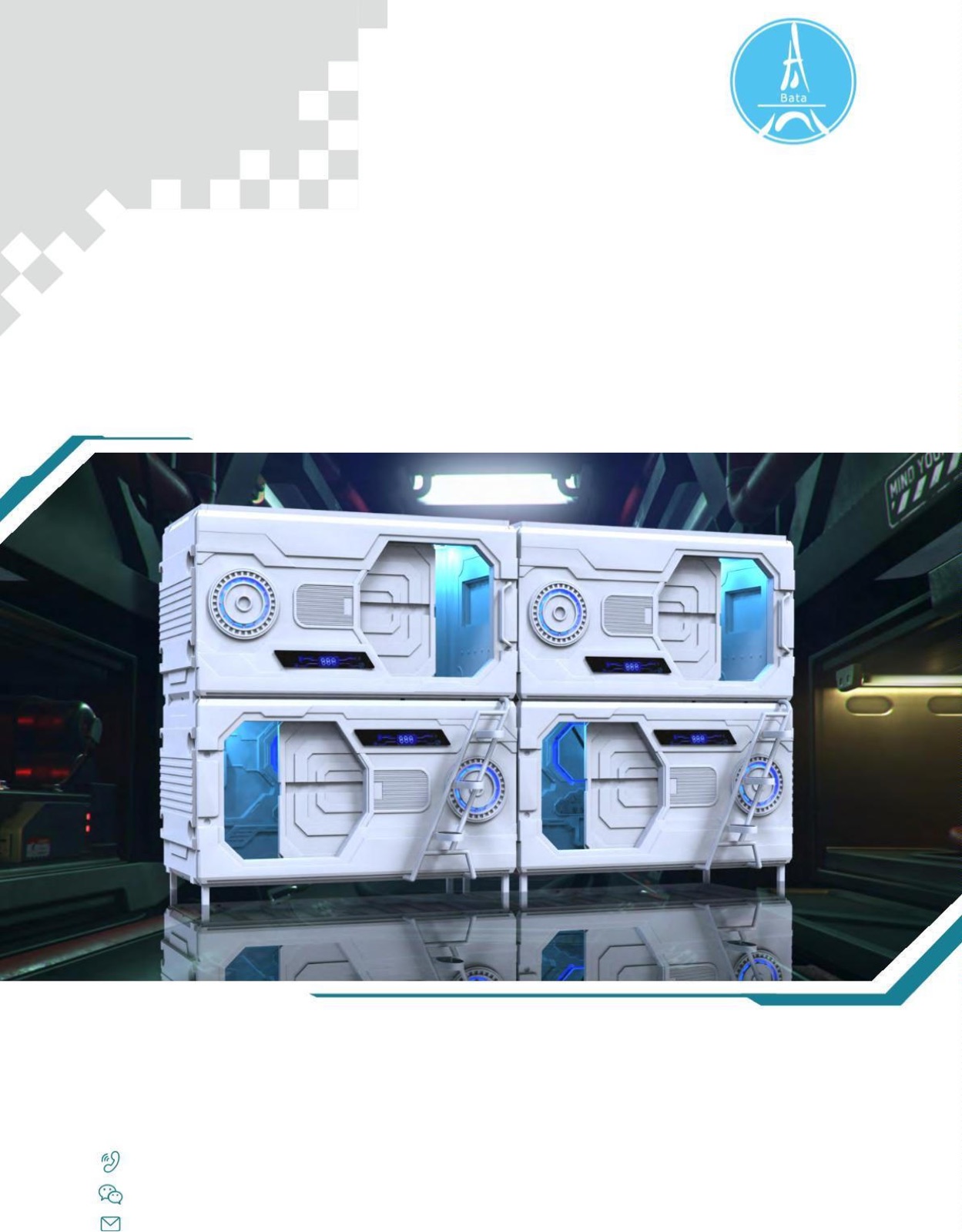
BIDUA Pods
Manufacturing engineering capability and industrial supply-chain expertise.
biduapods.com Live
Live
FinWault
Retailer and fleet financing infrastructure for the tyre distribution network.
finwault.com Live
Live
PersistIP
Plant IT, IoT for production lines and retailer point-of-sale connectivity.
ip.bidua.in
Questions partners and investors actually ask.
Why enter a mature industry like tyres?
Mature does not mean static. Two structural shifts — EV two-wheelers and the value-segment replacement market — are creating openings that the incumbents are not addressing well.
How does BIDUA compete with MRF on brand?
We do not — at least not in the premium segment. We compete in the value segment where the alternative is unbranded imports and dubious local manufacturers. The bar to clear there is honesty and consistency, not brand spend.
What is the capex?
Estimated ₹350-450 crore for a single plant with 4M tyre/year capacity, phased across 2028-2030. Project economics depend on PLI and state incentives.
Why two-wheelers and small cars only?
Focus. Truck and bus tyres are a different beast — different machines, different distribution, longer credit cycles. Two-wheeler + small-car covers 60% of unit volume and is more capital-efficient to enter.
Where will the plant be?
Likely Kerala (rubber proximity) or Tamil Nadu (industrial ecosystem and port access). Final decision after 2027 feasibility study.
Is this raising external capital?
Likely yes — tyre manufacturing is capital-heavy. We are in early conversations with strategic and financial partners. Reach out if interested.
When can I buy a BIDUA tyre?
Earliest commercial launch is 2031, assuming feasibility validates in 2027 and plant commissioning lands on time.
Will you make EV-specific tyres?
Yes. EV two-wheeler tyres are a deliberate part of the SKU strategy — low rolling resistance, higher load index, silent compounds.
We are scoping India's next focused tyre brand.
If you are a rubber industry veteran, an EV OEM, a tier-2 retailer or a fleet operator — we want to hear how you see the gap.